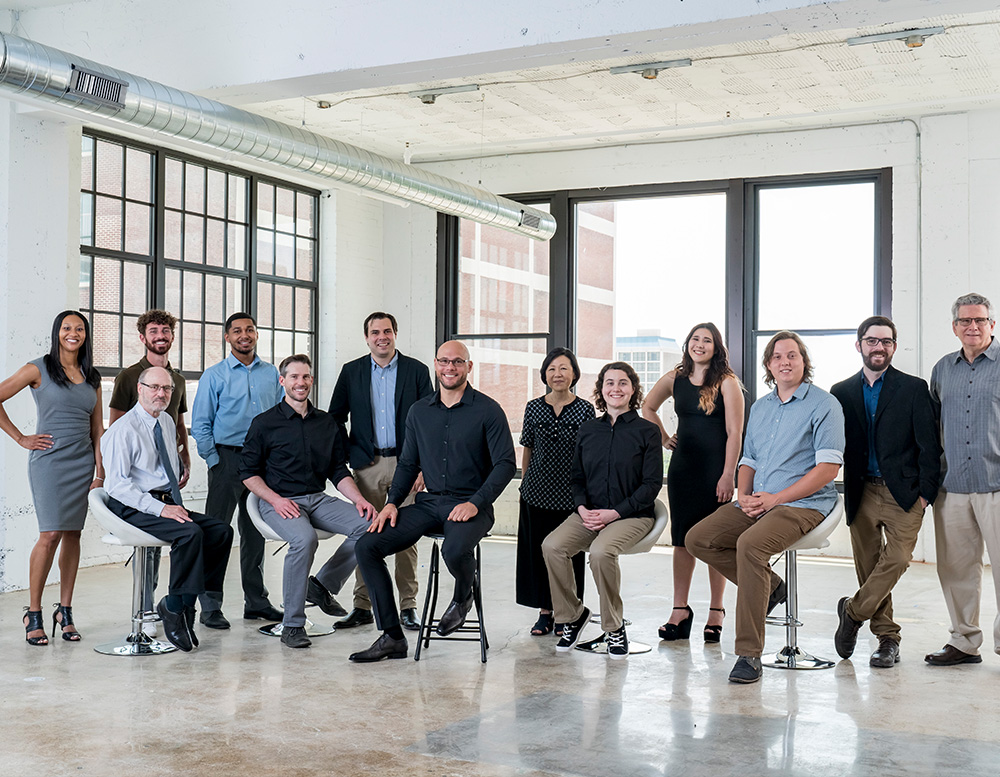




Finding the right digital marketing company in Portland, OR, is not just about hiring someone to run ad campaigns and hope for the best.
Businesses need more than scattered marketing activity. They need clearer visibility, better-qualified traffic, stronger conversion paths, and work tied to real business goals. A useful digital marketing campaign should help the business attract better-fit users, qualify interest, and turn more of the right people into customers.
Table of contents
At Hexxen, we help companies connect websites, search, content, paid campaigns, analytics, and ongoing improvement to strategies built around real growth.
What a Digital Marketing Company Actually Does
SEO, paid advertising, media production, content, and social media all matter, but they do not cover the whole job.
The role of a digital marketing company is to align visibility, traffic quality, messaging, website experience, and performance data so marketing activity supports business growth.

What Services Does a Digital Marketing Company Provide?
A typical Portland, OR, digital marketing company may offer several services under one roof. The right mix depends on the business, but the work should support clearer visibility, stronger conversion paths, and better traffic quality.
- SEO and search visibility built around the right services, industries, and markets
- Web design and landing pages that make the next step easier for users
- Conversion rate optimization that helps more of the right users take action through calls, forms, purchases, consultation requests, or other business goals
Those are not the only services that matter. Other channels and tactics may come into play depending on your industry, goals, and what success actually looks like.
How Does Digital Marketing Create Growth?
Digital marketing supports growth when the work is tied to a specific goal instead of more activity for its own sake.
Ask yourself:
Do you need to sell more products online?
Ecommerce performance may improve when product pages, search visibility, paid campaigns, landing paths, and checkout or conversion paths are all reviewed together.
Do you need better leads?
Lead generation improves when the strategy reaches the right people, answers useful questions, and gives visitors a clear path forward on the website.
Do you need stronger local visibility?
For local businesses, growth often depends on search visibility, review signals, location targeting, service-area content, and pages that match real local search behavior.
Do customers need more information before they contact you?
Some companies need content, reporting, and conversion paths that support buyers while they compare options, review services, and decide when they are ready to talk.
Do you need clearer reporting?
Clearer reporting helps show which channels, pages, campaigns, and actions are actually supporting progress. The goal is not more data for its own sake, but better information for making the next marketing decision.
These goals are realistic and measurable, but each one may call for different priorities, resources, and timelines.
Unclear ownership, limited time, budget constraints, talent gaps, and website limitations can all affect where a business should start. The plan should identify the urgent work, push lower-priority items back, and build around goals that can create real movement.

How Businesses Can Compete With Stronger Digital Marketing
Activity alone does not help a business earn trust, get found, or get chosen. A competitive digital marketing company in Portland, OR, starts by reviewing the work already in place, the results that matter, and the opportunities that deserve more attention.
The goal is not to copy every competitor with a stronger search presence, cleaner website, or more visible digital footprint. The goal is to understand why they are being found, where your own strategy is thin, and what needs to improve before more activity turns into better results.
Why Marketing Work Needs to Create Progress
A campaign can produce plenty of reportable activity without creating the progress a business needs. Tracked activity like pageviews, email opens, impressions, and low-intent clicks only matters if it helps explain whether stronger opportunities are being created. That is when reporting starts to make digital marketing feel unclear instead of helping the business make better decisions.
A useful digital marketing strategy separates activity from intent. The point is to understand which signals suggest interest, trust, and real sales potential, and which ones are just noise.
Why Is the Website Not Producing Better Leads?
A website may get traffic and still fail to produce strong leads if the content, page structure, calls to action, and conversion paths do not match what users need.
The gaps usually include:
- Broad service pages that do not clearly address the best-fit customer
- Traffic that looks relevant at first but does not reflect strong purchase or contact intent
- CTAs that are too hard to find, too vague, or disconnected from what the page is about
- Thin service, industry, or location pages that do not give users enough reason to choose you
- Reporting that shows activity but does not clearly show which pages or channels are producing stronger leads
The answer is not always more visitors. Better leads usually come from working with a digital marketing company in Portland, OR, that can improve the path between the search, the page, and the next action.
Why More Visitors Do Not Always Mean Better Opportunities
A website can attract more visitors and still miss the people most likely to become useful leads. When traffic comes from broad searches, unclear campaigns, or pages that do not line up with user intent, the numbers can rise while the quality stays weak.
Better opportunities come from tightening the match between the audience, the page, and the next action users are asked to take.
Why Stronger Messaging Matters Before More Campaigns
Clearer messaging gives the rest of the strategy a better story to build from. Pages, campaigns, search results, and calls to action all work better when users can quickly understand what the business does, who it helps, and why it is a credible option.
More campaigns will not fix a message that is hard to understand. If the core offer is unclear, more promotion may only send more people into the same confusion.
Why Competitors May Look Stronger Online
A competitor may look stronger online because their website gives users and search platforms clearer information. The service, audience, trust signals, and next step are easier to recognize.
Their content is more specific.
Better service pages, clearer local targeting, and focused supporting content can help competitors answer searches more directly.
Their trust signals are more visible.
Reviews, case studies, industry examples, project details, and clear messaging can make the business easier to evaluate.
Their site makes action easier.
Clearer structure, stronger calls to action, focused landing pages, and better follow-up paths can reduce hesitation.
The goal is not to copy the competitor. The goal is to understand which gaps are making them easier to find, compare, and choose.
Digital Marketing Services That Support the Same Goals
Marketing gets harder to manage when every channel exposes a different weak spot in your digital infrastructure. SEO, web design, content, paid campaigns, conversion work, and analytics usually perform better when they support the same goals.
Not every business needs the same set of services right away. The right mix from a digital marketing company in Portland, OR, depends on the improvement goal, the biggest gaps, and the channels most likely to create useful movement first.

SEO & Content Strategy
Publishing content can help improve search engine result page (SERP) rankings, but a better ranking is only useful when the search matters to the business.
The rankings that matter most are usually tied to:
- The services and products your business most wants to grow
- The questions users ask before they are ready to choose a company
- The locations, use cases, or industries where your business can stand out
- Searches tied to comparison, decision-making, and stronger intent
Search visibility works harder when it connects your business with users during the research, comparison, and decision stages.
How Do You Climb SERPs?
Build around search intent
SEO content should match the reason behind the search instead of pushing every visitor into the same generic sales message.
Build connections between related pages
Blog content, service pages, industry pages, case studies, and location pages should support each other instead of sitting like disconnected pieces of the site.
Improve what already exists
A content strategy does not always require a new page. Existing pages may need clearer answers, better structure, more useful next steps, or better internal links.

Content Strategy Is More Than Publishing
Publishing more is not the whole strategy, and neither is renaming the same work every time search changes. SEO and content strategy should help decide which pages are needed, which ones should be improved, what needs to connect, and which topics are worth the effort.
Where SEO and content stand right now:
- More content does not mean better content. Every page you publish reflects who you are as a business and how bots crawl and interpret your site.
- AI assistants can help with content, but the output still has to be useful, accurate, differentiated, and worth publishing under your name.
- Older pages may need updates, consolidation, stronger internal links, or clearer next steps before the site needs another round of brand-new content.
- A page should make its purpose clear without stuffing the same keywords into every available sentence. Users and bots can usually tell when the copy is trying too hard.
- Link building remains useful when it connects the business to relevant, trusted signals instead of low-value link volume.
- Directory and citation listings can help keep NAP data, core services, and location signals consistent across the web.
How Do SEO, AEO, GEO, Local SEO, & AIO Work Together?
These labels are not completely separate, but they can help frame content from different angles:
- SEO (search engine optimization) helps users and search engines understand which services, products, industries, and topics your business should be found for.
- AEO (answer engine optimization) helps when users are looking for direct answers. FAQs, clear definitions, short explanations, and direct answers can make content more useful during early research.
- GEO (generative experience optimization) looks at how your brand appears, gets understood, and performs across AI-powered search experiences.
- Local SEO connects your services to specific markets through regional examples, local proof, service-area content, and smarter local targeting.
- AIO is often used as a broader way to think about how search, content, answer-driven results, citations, and AI-assisted discovery connect.
AI search optimization gives these ideas a practical umbrella, especially when terms like AEO, GEO, AIO, and AI SEO get used inconsistently. The goal is to understand the overlap instead of building a separate strategy around every acronym.
Good SEO content should be clear for users, structured for search engines, useful for AI-driven summaries and citations, and connected to the larger goals of the website.

How Web Design Supports the User Journey
A website is often one of the first meaningful places a person encounters your business. It helps them understand who you are, what you do, whether you are credible, and why your work matters.
The website has to do more than exist. It should clarify the story, answer the right questions, and give users a path they can follow.
Web design should help users move through the story instead of treating every page like an isolated pitch.
Lead users through the page in order.
A better page experience helps users move from problem to solution, comparison to trust, or interest to action without making them piece the story together themselves.
Shape the page around the visit.
High-intent visitors may need service details, proof, and a clear CTA right away. Broader awareness visitors may need more context before they are ready to take the next step.
Make the CTA part of the page path.
Calls to action work better when they fit the page path instead of appearing as random buttons. Forms, contact options, and page structure should make the main action clear at the right moments.
When Too Much Website Complexity Gets in the Way
A larger site can be useful, but size alone does not improve the experience. Pages, menus, forms, animations, and design elements need to support the user journey instead of making the site harder to use.
Website complexity becomes a problem when users have to understand your internal structure before they can understand your offer. The problem often appears when:
●Navigation makes users learn the company first
Menus often follow departments, service lines, or staff logic instead of the way users actually look for information.
▣Pages cover the same ground without adding clarity
Location, service, or industry pages can cover the same ground without helping users understand why your business is the right fit.
✦Calls to action compete for attention
When the page offers too many buttons, forms, popups, or next steps, users may not know which action matters most.
★Useful information gets hidden by the page
Proof, pricing context, service details, contact options, animations, and design elements can all create friction when they slow users down.
Note: Advanced navigation, high-resolution images, auto-play videos, excessive redirects, and other site elements can slow the site down. Page load speed is a ranking factor, but speed also shapes how usable the site feels once a visitor gets there.
A mobile site should not feel like a separate version of the real website. When users have to pinch, hunt, wait, or fight the layout on a phone, the issue is bigger than mobile formatting. It is a broader UI/UX problem. The same thinking applies to landing page design, forms, ecommerce paths, and more advanced experiences like progressive web apps.
Effective web design from a digital marketing company in Portland, OR, helps organize detail instead of deleting it. The goal is to make the site easier to use while still giving visitors enough context to choose a next step.
Paid Campaigns & Audience Targeting
Paid campaigns are more useful when the audience, offer, page, budget, and tracking are pointed at the same goal.
They can help with:
- Testing markets, messages, or landing pages
- Promoting seasonal offers, priority services, or products
- Reaching specific audiences through intent, location, behavior, or remarketing signals
- Competing for high-intent searches that are difficult to win organically
The risk is buying traffic before the surrounding system can support it. If the offer is unclear, the page is weak, the audience is too broad, or tracking is unreliable, paid campaigns can spend without producing much useful information.
When Are Paid Campaigns Worth Paying For?
For businesses working with a digital marketing company in Portland, OR, PPC budget should start with the goal, not a default spend number. The right budget depends on the offer, competition, lead or sale value, and what the paid campaign is supposed to prove.
Revenue-driven campaigns need more than activity.
A revenue campaign should make the business less dependent on guessing. If tracking shows which products, promotions, deals, or services are working, spend can move toward performance.
Testing campaigns can answer useful questions.
Paid campaigns can test landing pages, offers, messages, and locations before the business invests months of content or SEO work in the wrong direction.
PPC can support priority visibility while SEO catches up.
Organic rankings often create more durable value over time, but PPC can support priority services, seasonal pushes, or competitive searches while that work develops.
Remarketing campaigns can re-engage interested users.
Some visitors leave before they are ready to act. Remarketing can help bring back people who visited key pages, compared services, started a form, or showed interest without converting.
Launch campaigns can build early momentum.
New services, products, offers, or locations often need visibility before organic search catches up. A focused campaign can help test demand, collect useful signals, and support the launch while longer-term work develops.
Competitive campaigns can help compare market response.
Paid campaigns can test how users respond to different services, offers, locations, or messages. The point is to learn what creates movement in a crowded market, not just buy more visits.
Ads can carry trust issues. Some users skip sponsored results, while others compare paid listings more carefully. That does not make PPC useless, but it does mean the ad, landing page, offer, and follow-up have to justify the click.
Web Development & Digital Infrastructure
A website needs more than design on the surface. For a digital marketing company in Portland, OR, solid web development gives the site the backbone to load quickly, function reliably, collect useful information, and support the tools a business uses online.
Web development ties the work together.
Ecommerce functionality, forms, tracking, API connections, online payment integrations, custom software, and other technical pieces shape both the user experience and the process behind the business.
Development should support long-term improvement.
A website that works today should not become a dead end tomorrow. Better web development infrastructure gives the business room to adjust based on performance data, user behavior, new services, and changing needs.
Development should support how the business actually runs.
A website should fit the way the business handles leads, collects information, manages content, connects tools, and uses the system internally.


How Ecommerce Development Supports Online Sales
For businesses that sell online, ecommerce development needs to support more than a product catalog. The buying path depends on details like:
- Product pages that give users the information they need before they add to cart
- Cart and checkout paths that make purchase details easy to review and complete
- Backend ecommerce details like payment processing, shipping logic, inventory, and tax settings that work reliably
- Tracking that shows which products, campaigns, and user behaviors are actually supporting online sales
- Mobile buying paths that make browsing, cart review, and checkout easier on smaller screens
The buying path works better when users can understand the process, trust the next step, and leave the business with clearer data for future improvements.
What Your Digital Marketing Company in Portland, OR, Should Be Able to Explain
A digital marketing company should not leave you guessing about the work, the reason behind it, or how it connects back to business goals.
A useful relationship includes clear priorities, realistic timelines, measured reporting, and honest conversations about what is working, what is not working, and what should change next.
Questions your Portland, OR, digital marketing partner should be able to answer:
What can I do to get more web traffic?
Traffic only helps when the website gives visitors a useful place to land. More visitors may require better rankings, paid visibility, better content, technical fixes, or pages that match how people search.
Why are we visible for some searches but missing from others?
Keyword gaps can come from page quality, competition, support content, intent mismatch, or time. The useful question is which targets are worth the work.
Why do leads stall after they come in?
Leads can stall for reasons beyond the campaign or channel that produced them. Fit, timing, follow-up, offer clarity, page expectations, and sales process gaps can all affect whether an inquiry becomes a real opportunity.
Which pages are worth fixing first?
The first pages to improve are usually the ones tied closest to business value. That can include high-traffic pages, important service pages, weak landing pages, or pages where users drop off before the next step.
Where does the work go next?
A digital marketing company should be able to explain the next move without hiding behind “optimization,” recycled tasks, or reports nobody wants to unpack.
A digital marketing company should make the work easier to understand. If that is not happening, it may be time to revisit what you need and what your digital presence is meant to accomplish.
Common FAQs for Marketing Agencies
Here are a few questions businesses often ask when choosing a digital marketing company in Portland, OR:
Does digital marketing only mean SEO and paid ads?
No. Search visibility and paid ads are useful pieces, but the broader strategy may include content, web design, landing pages, development, conversion work, reporting, and ongoing refinement.
Digital marketing works better when the pieces are connected. More traffic only helps when the website can explain the offer, build trust, and make the next step clear.
When should digital marketing start showing results?
It depends on the goal, the market, the condition of the website, and the channels involved. Paid campaigns may create visibility faster, while SEO, content, local visibility, and better organic rankings usually take more time.
The work should not stay frozen after launch. Digital marketing should improve as data gets clearer, pages get better, priorities sharpen, and performance signals become more useful.
Can digital marketing help filter weak-fit leads?
Yes, when the strategy focuses on the right audience, searches, pages, and conversion paths. More traffic does not automatically create better leads.
Lead quality often improves when the website speaks more clearly to best-fit customers, filters weak-fit traffic, answers better questions, and makes the next action easier to understand.
What should I look for when choosing a digital marketing company?
Choose a company that can connect the work to real goals instead of hiding behind task lists, reports, or vague promises.
- Clear direction instead of a pile of disconnected marketing tasks
- Reporting that makes performance easier to understand
- Experience connecting content, design, development, and marketing channels
- Priorities and timelines that fit the goals, budget, and current website
- Enough honesty to discuss what is underperforming and what comes next
A good digital marketing partner should make the path forward easier to understand.
Build a Smarter Digital Marketing Strategy
Hexxen helps businesses connect search, content, design, development, paid campaigns, and performance improvement into digital strategies built around real growth.
Services may include:
Whether you need better lead quality, better visibility, a more useful website, or a clearer plan for what comes next, our team can help identify the right path forward. You can also review our client testimonials and case studies to see how our digital marketing company in Portland, OR, supports digital growth.
Contact us or call (314) 499-8253 to start the conversation.