



Choosing a web development agency in St. Petersburg, FL, should mean more than finding a team that can produce pages and code.
Businesses need websites that support growth, create opportunities, and make important interactions easier for customers and internal teams. Effective development provides the foundation for better experiences, connected systems, and technology that can adapt as requirements change.
Table of contents
Hexxen brings together development, strategy, design, and digital marketing to build online systems that support business goals. We help companies improve operations, strengthen customer experiences, and create a stronger digital foundation. Hexxen supports St. Petersburg, FL, businesses as a web development agency that brings technical execution and digital strategy into the same plan.
Build a Better Website Foundation
Developing an Agency Partnership to Make Web Worth It
Businesses need web development agencies for more than isolated fixes. The right partner helps improve technology, support operations, and build a foundation that can adapt as business needs change.
Our team works to understand your goals, current systems, customers, and the role the website plays within the larger organization. That insight helps guide practical solutions today while supporting better technology decisions over time.
A proactive web development partner should:
- Turn ideas into practical solutions built around real users and goals
- Assess available platforms, features, and technical choices before they create larger constraints
- Connect systems and tools so digital operations work more efficiently
- Create customer experiences that continue working as business needs evolve
The relationship should do more than resolve today’s technical challenge. The partnership should make future choices easier to understand and act on.

Developing Reliable Websites That Support Growth & Revenue
Modern websites need to do more than explain what a business offers. The website should support business operations through better customer experiences, more efficient internal workflows, and a foundation that can grow over time.
The right approach brings functionality, performance, security, and scalability into the same development plan.
Ecommerce Development
Ecommerce development connects the customer-facing buying experience with the systems that manage products, payments, inventory, orders, shipping, taxes, and customer accounts.
The storefront needs to provide a clear buying experience, but the development behind it also has to move accurate information through every step of the transaction.
Website Performance
Website performance depends on more than image size or page design. Code, hosting, caching, database activity, plugins, scripts, and external services all play a role in how reliably the website responds.
A useful performance strategy focuses on how the website actually behaves for users, not just how it scores in a testing tool.
Website Security
Security decisions should reflect how the website handles accounts, access controls, forms, payments, sensitive information, updates, backups, and third-party connections.
Security does not end when the website launches. Ongoing maintenance and ownership still matter. Even a strong original build can become vulnerable when plugins age, code loses support, permissions weaken, or ownership becomes unclear.
Scalability and Future Growth
A website should be able to support new locations, products, users, content, integrations, and functionality without requiring the entire system to be reworked.
The goal is not to give every website an enterprise-scale foundation. It means the platform, architecture, and development decisions should match what the business realistically expects the website to support.
Each of these development priorities affects the others. A successful website connects strong customer experiences with efficient internal workflows and the technology behind them.
How Well-Built Websites Add Business Value
More pages and advanced features do not automatically make a website more useful. Its value depends on the work it performs for the business. The right web development agency in St. Petersburg, FL, builds around how the organization works and what customers and internal teams need from the site.
Supports More Valuable Actions
Purchases, inquiries, bookings, applications, account creation, and other valuable actions can all begin through the website.
The right people are more likely to take action when the website clearly presents the offer and gives them a dependable path forward.
Removes Friction From Routine Work
Connected systems, useful administrative tools, and well-planned workflows reduce duplicate entry, unnecessary handoffs, and routine work that should not require constant staff involvement.
Website value increases when the platform improves internal operations instead of focusing only on what customers see.
Protects Business Time and Investment
Reliable infrastructure and maintainable code reduce the need for emergency repairs, temporary workarounds, and repeated rebuilds.
A capable web development agency should make it easier to update content, manage important functions, and complete reasonable changes without turning every request into a technical crisis.
Creates Room for Future Needs
Growth often introduces new requirements. Future growth may involve more locations, expanded services, new products, additional users, connected tools, or different customer journeys.
Strong development makes it easier to support expanding requirements without replacing the website each time the business evolves.
The most valuable website is not necessarily the largest or most advanced. The right website continues helping the business long after launch.

What Our St. Petersburg, FL, Web Development Agency Builds and Improves
Not every website is built to perform the same job. The site may organize information, process transactions, control user access, support internal work, or provide specialized features.
That work may include:
- Business websites: Help users understand the company, its services, and its expertise through straightforward navigation
- Portals and account-based experiences: Give customers, employees, or other approved users access to protected information and tools
- Website rebuilds and CMS migrations: Replace outdated systems with a cleaner platform for managing content and functionality
- Custom website functionality: Add custom features that support forms, searches, calculations, workflows, reporting, and other business needs

Building Websites for Different Industries
For a web development agency in St. Petersburg, FL, industry context affects how websites should be structured, connected, and maintained.
Our experience includes businesses across multiple industries, including:
Legal Industry
Law firms need organized practice-area pages, trustworthy attorney information, and intake systems that make it easy for clients to get started. Effective web design for law firms often combines client intake, secure document management, and competitive positioning through local SEO.
Home Services
Whether users are calling, requesting pricing, booking service, or dealing with an urgent problem, the website needs to work clearly on desktop and mobile. Well-built home services websites also clarify where the company works before users call, request a quote, or schedule service.
Healthcare
Patients should be able to find the right service, provider, location, and next action without working through confusing information. Healthcare website development should balance patient-facing clarity with accessible forms and practical content management behind the scenes.
Education
Educational organizations often need one website to support current students, families, employees, prospective applicants, and other audiences with different priorities. Education websites and digital tools should keep resources, events, account access, and routine updates organized for the teams responsible for managing them.
St. Petersburg, FL, Web Development Agency Projects & Case Studies
Real website projects show the practical impact of decisions involving functionality, system connections, scalability, usability, and maintenance. Explore our case studies to see how Hexxen approaches different technical requirements and business goals.
My website traffic has increased, my business has grown, their agency has far exceeded my expectations
“Hiring a digital advertising, SEO, web development company is a very tough decision. It is a business market where companies can look great online, present well in a meeting and then take your money and outsource everything …”

Christopher Combs
Combs Waterkotte
Web Development for Law Firm Growth
Hexxen built Combs Waterkotte a platform designed to support the firm's growth from a small St. Louis practice into a multi-state organization with six locations and more than 20 attorneys and staff.
- A scalable website foundation: The website was rebuilt to support better intake paths, regional experiences, and continued expansion across markets, attorneys, services, and content.
- Advanced intake systems: Advanced intake functionality gives the firm clearer lead information, more efficient routing, and fewer manual handoffs.
- Connected operations and reporting: Hexxen connected lead activity with consultations, signed cases, and revenue while bringing court information into the firm’s case-management workflows.
- AI-assisted intake and communication: Hexxen developed AI agents that support intake, respond to common questions, and improve communication with prospective and current clients.
- Continued technical development: Hexxen continues to build new functionality, integrations, regional tools, and workflow improvements as the firm expands.
What began as a website rebuild developed into a much broader technical partnership. Ongoing development now supports the firm’s intake systems, reporting, technical infrastructure, and growth across new markets.
Additional Website Development Examples
The right development approach depends on what the organization needs the website to do. These projects illustrate how Hexxen approaches different website challenges without forcing the same solution onto every organization.
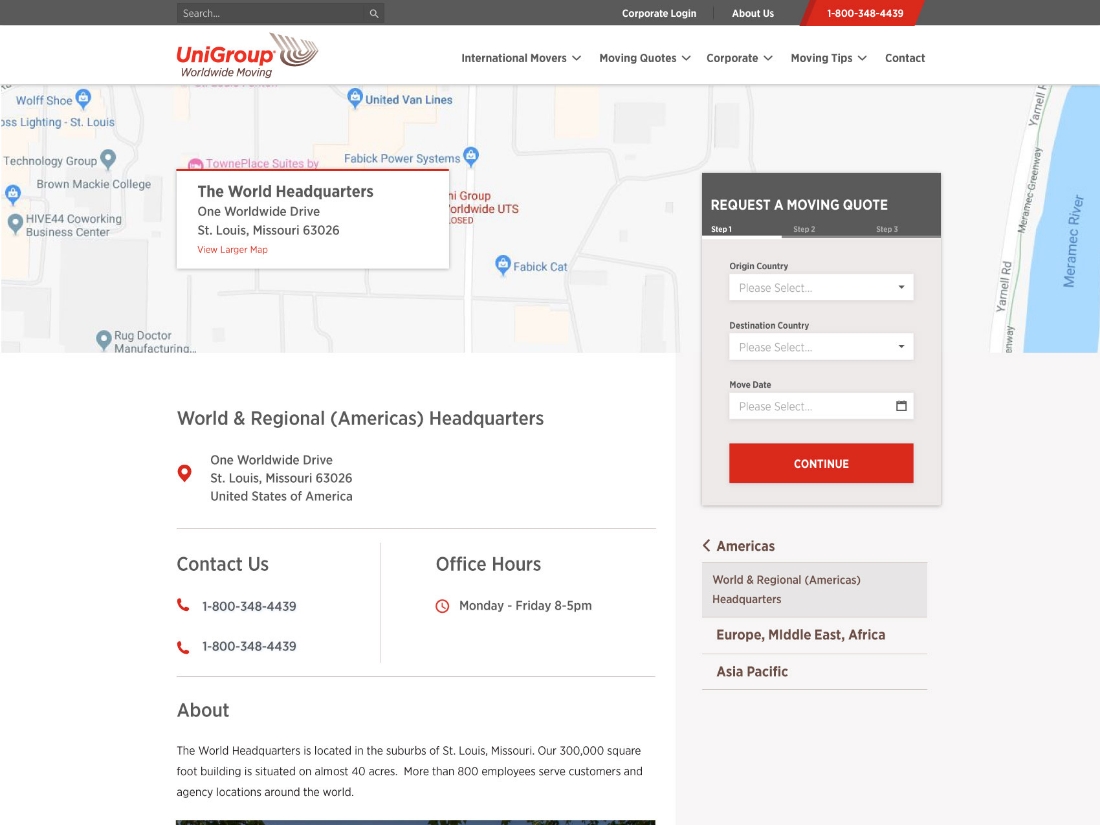
Website Modernization & API Integration
UniGroup Worldwide
Hexxen rebuilt UniGroup Worldwide's website to replace legacy technology with a modern website that improves conversions and connects the systems behind UniGroup’s worldwide operations.
- Legacy technology modernization: A modern integration replaced deprecated API technology and improved the way information moved between systems.
- Global system integration: API integration connected information across the organization’s services and global operations.
- Conversion-focused rebuild: The website rebuild created a more usable experience with clearer navigation and stronger opportunities for engagement.

CMS Migration & Product Catalog Development
John Henry Foster
Hexxen rebuilt John Henry Foster's website to build a more practical digital platform around complex product information, internal management, and different user needs.
- Large-scale CMS migration: A large volume of content, including more than 1,500 pages and thousands of product listings, moved into a clearer structure.
- Product discovery: Location-aware search and specialized functionality made a complex product catalog easier for users to explore.
- Internal management: A more manageable CMS reduced friction around normal content changes and product updates.
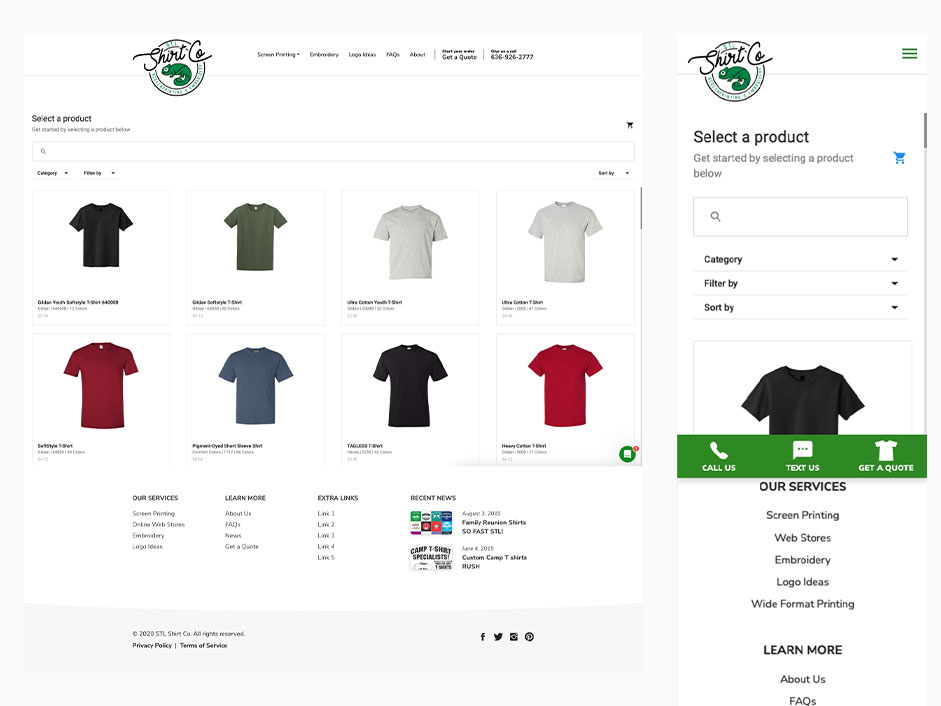
Custom Ecommerce & Conversion Development
Shirt.Co
Hexxen developed Shirt.Co's website to bring products, services, and purchasing paths into a clearer digital experience built for ecommerce growth.
- Custom ecommerce experience: Hexxen organized the storefront around clearer product discovery, service selection, and buying paths.
- Conversion-focused functionality: The website used clearer customer journeys, quote requests, and conversion points to support more meaningful action.
- Performance insights: Website reporting connected activity and engagement with the information Shirt.Co needed to evaluate marketing performance.
When Your Website Has a Development Problem
Development problems often appear as recurring frustrations, unreliable features, and limitations the business has learned to work around. When those problems become routine, a web development agency in St. Petersburg, FL, may need to investigate more than one page, plugin, or temporary repair.
PERFORMANCE & RELIABILITY
The Website Is Slow, Unstable, or Breaking
A website often shows warning signs through smaller failures before a larger breakdown occurs. Some users may encounter slow pages, shifting layouts, or features that do not work correctly, creating an unreliable user experience.
Warning signs may include:
- Forms that do not submit reliably or deliver the right notifications
- Menus, buttons, layouts, and interactive tools that fail on specific browsers or devices
- Pages that respond slowly because too many scripts, plugins, assets, or inefficient processes are competing for resources
- Recurring errors that disappear for a short time and then return
Recurring errors often suggest that the problem extends beyond the individual page or feature that keeps failing.
TECHNICAL DEBT
Short-Term Fixes Now Hold the Website Together
A plugin, patch, custom snippet, or manual workaround may solve one problem while adding another layer to the system. That complexity makes it harder to understand why one section behaves differently, which tool owns a function, or what changes may create new conflicts.
That often leads to:
- Overlapping functionality across plugins, scripts, or custom features
- Custom code and plugins nobody actively maintains
- Website functions that become difficult to support when one developer is unavailable
- Software updates that create recurring problems
- Additional requests built on top of existing workarounds
Once workarounds become permanent, even reasonable improvements take more time to understand, build, and maintain.

Why Would a Business Need a Web Development Agency?
A company may need web development when it wants to build something new, improve current technology, connect systems, or make more informed technical choices.
Businesses often need support with:
Your business goals are blocked by your current technology
A digital system should fit the way your organization operates. When the website, platform, or surrounding tools create limitations instead of solving problems, development expertise can identify what needs to change.
This may involve outdated platforms, disconnected systems, duplicate data entry, manual processes, or infrastructure that cannot support the next feature, integration, service, or workflow. As organizations grow, their digital infrastructure often has to evolve with them.
You have a digital project that requires outside expertise
Some projects become difficult to manage internally because they require deeper technical expertise and more execution support. The right agency can define the technical needs, select an appropriate path, and guide the project from planning through launch.
The project may center on a new site, platform rebuild, ecommerce development, integrations, custom software, performance issues, or a CMS migration.
You need clarity before making a technology investment
Businesses may have several realistic technology options without knowing which one best supports their goals. Development guidance can compare platforms, workflows, functionality, and technical tradeoffs before significant time and resources are committed.
The goal is not to add technology for its own sake. Technology decisions should improve how the organization operates while supporting users and long-term priorities.
Businesses often need a web development agency in St. Petersburg, FL, when the technology no longer fits the work, future requirements are difficult to support, or staff must keep working around the system.

What to Expect From a Web Development Agency
Clearer ideas, capable execution.
The right web development agency in St. Petersburg, FL, looks beyond writing code and completing technical tasks. That means understanding what the organization needs to accomplish, which systems are already in place, and what additional support the project requires.
- Web design shapes how the website looks, feels, and guides users before development turns those decisions into working pages.
- Application development may become part of the project when the business needs portals, dashboards, custom workflows, or other functionality beyond a standard website.
- Search engine optimization may shape the website’s structure, page connections, redirect strategy, performance, and how content supports discovery.
How Front-End, Back-End, & API Development Connect
A website depends on several connected layers working together. Users interact with the front end, the back end processes the data and logic behind each action, and APIs connect those experiences with surrounding platforms.
Front-End Development
Web design sets the structure, interface direction, and experience the website is meant to provide. Front-end development turns those decisions into working pages, navigation, forms, layouts, and interactions.
Front-end development may support:
- Clear content organization and navigation
- Responsive layouts across desktop, mobile, and tablet screens
- Forms, conversion paths, and interactive elements that respond correctly
- Accessibility considerations that make website information and functionality more accessible to more people
Back-End Development
The back end manages the systems, data, permissions, and functionality that allow the website to perform meaningful work.
Typical back-end responsibilities include:
- Databases used to organize customer information, products, orders, and website content
- Custom software tailored to specialized workflows, processes, and technical requirements
- CMS functionality and administrative management tools
- User portals, dashboards, web applications, and business tools
APIs & Integrations
Websites often need to exchange information with the tools a business already uses. API development links the website with surrounding software such as CRMs, payment platforms, databases, ecommerce systems, scheduling tools, and reporting technology.
The right connections limit duplicate work, support reliable data movement, and fit the website into existing operational processes.
Front-end, back-end, and integration decisions should support one another. An attractive front end still fails users when the underlying functionality is unreliable. Reliable back-end systems still create friction when users cannot navigate them. Connected systems still create problems when the website mishandles the data moving between them.
Web Development Agency FAQs
These common questions can help businesses evaluate a web development agency in St. Petersburg, FL:
What does a web development agency in St. Petersburg, FL, actually do?
The work of a web development agency may include planning new websites, building functionality, improving existing systems, and providing ongoing maintenance.
The agency should help separate useful requirements from features that add complexity without solving a real problem. Development is more useful when technical decisions align with real users, internal workflows, and future requirements instead of adding features without a clear purpose.
How much does web development cost in St. Petersburg, FL?
Web development costs vary according to the scope and technical requirements of the project. The estimate may account for:
- Website scope, architecture, and content volume
- Ecommerce, custom functionality, or system integrations
- Design, content, migration, and internal management requirements
- The time required for planning, building, testing, and launching the website
A useful estimate should follow a review of the project requirements, available approaches, and expected responsibilities.
Can a web development agency work with my internal team?
A web development agency can work alongside internal marketing, IT, design, content, or development teams without replacing the people already involved. The agency may provide additional capacity, specialized technical knowledge, or support for a project the internal team cannot reasonably complete alone.
The working relationship should define responsibilities, communication, approvals, system access, and decision-making authority early. Clear ownership helps both teams contribute without duplicating work or leaving important tasks unassigned.
How long does a website development project take in St. Petersburg, FL?
Several factors affect the schedule, including website scope, custom functionality, integrations, content readiness, internal reviews, and quality testing.
Simple website projects may progress faster than ecommerce builds, custom platforms, or connected systems with more complex technical requirements. The agency should define the main requirements, responsibilities, and project stages before setting a firm schedule.
Can a web development agency take over a project another developer started?
Changing developers does not automatically require rebuilding the entire project. A web development agency may be able to preserve completed work and continue development once it understands the current systems, code, files, integrations, and remaining goals.
The agency should still evaluate the existing foundation before making promises about cost or timing. Incomplete documentation, missing access, unsupported technology, or unreliable custom work can affect how much of the original project remains usable.
Can a web development agency in St. Petersburg, FL, improve my existing website?
Many websites benefit from focused development improvements instead of a full rebuild. Common improvements include:
- Restoring features that no longer perform as expected
- Improving performance, security, or content management
- Connecting outside platforms and business tools
- Adding features the current website does not support
A rebuild may be more practical when the existing structure blocks important requirements, relies on fragile technology, or costs more to keep patching than to replace.
Can you connect my website with the software my business already uses?
Many websites can exchange information with the software a business already relies on. Common connections include customer management platforms, payment tools, inventory systems, scheduling software, ecommerce platforms, reporting tools, and internal databases.
The development approach depends on the systems involved, the data being shared, and the integration methods each platform supports. Planning should also define ownership, permissions, error handling, security, and how the connection will be maintained over time.
What happens after the website launches?
Post-launch responsibilities should reflect the website’s technical needs and the agreement between the business and development agency. Common responsibilities may include:
- Regular updates to website content and software
- Website performance checks, backups, and security monitoring
- Hosting support, troubleshooting, and ongoing technical maintenance
- Evaluating and building future website updates
Those responsibilities should be clear before launch. The business should know who controls important accounts, who handles technical problems, and how future changes will be requested and completed.
Partner With the Right St. Petersburg, FL, Web Development Agency, Not the "IT Guy"
Hexxen develops and supports websites with the technical structure, functionality, and adaptability needed to perform useful work for the business.
Our approach combines:
- The project needs sound technical guidance to match platforms, functionality, and development methods with the actual requirements.
- Defining responsibilities, systems, access, and expectations early creates clear scope and ownership.
- A website should support continued updates and future growth after launch.
Additional development services include:
A finished website is only part of what our St. Petersburg, FL, web development agency provides. The larger goal is a practical foundation that supports the organization’s next priorities.
Ready to talk through the project? Contact us or call (314) 499-8253.