

Legal Directories & Paid Lead Platforms for Law Firms
Part 2, Chapter 4: Paid Visibility Beyond Search Ads
Table of contents
A prospective client searches for an attorney and finds the same law firm on Google, Avvo, and FindLaw. The firm's directory profiles help that person compare credentials, practice areas, and reviews before deciding whom to contact. But appearing in those directories doesn't necessarily mean the firm paid for placement.
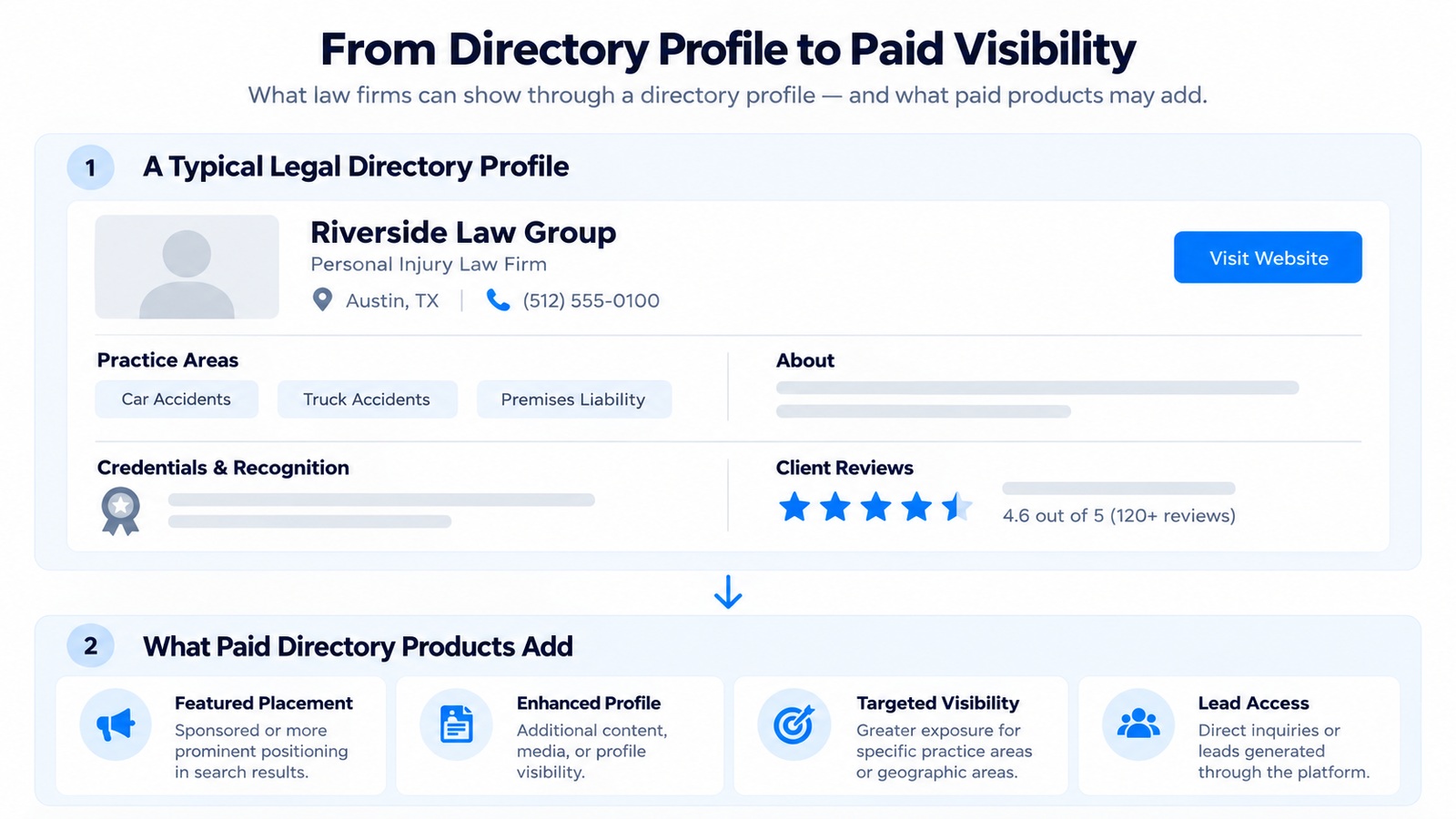
Maintaining a legal directory profile and paying for additional visibility are two different investments. Free listings can support credibility and attorney discovery, while premium profiles, sponsored placement, and lead programs may provide additional exposure. The question is whether those paid products deliver enough value to justify their cost.
Key Takeaways
- Legal directories can support visibility, credibility, and attorney discovery even without paid placement.
- Paid directory products may include enhanced profiles, featured placement, targeted visibility, or lead access.
- Directory packages vary widely, so firms should know what is included and how results will be measured.
- Paid placement is most useful when the visibility, qualified leads, or retained cases justify the investment.
What Are Legal Directories Good For?
Legal directories make important information about a firm easier to find and verify outside the firm's own website. They support search visibility, reinforce trust signals, and give prospective clients another place to confirm who the firm is and what it does.
Directories also serve two different roles: firms use them as profile and reputation tools without paying, while many platforms sell additional visibility, placement, or access to leads.
Profile & Reputation
What Law Firms Can Do Without Paying
A directory profile gives the firm another place to present useful information, reinforce what prospective clients find elsewhere, and build relevant links back to the firm's website.
- Publish firm, attorney, office, and practice-area information
- Show credentials, awards, ratings, and reviews
- Support attorney discovery and broader search visibility
- Earn links from relevant legal-industry websites and profile pages
- Give prospective clients another place to verify or compare the firm
Paid Visibility & Leads
What Law Firms Can Pay For
Many legal directories sell additional visibility or access to prospective clients on top of their normal profile features.
- Enhanced or premium attorney profiles
- Sponsored placement in directory results
- Practice-area or geographic visibility
- Advertising across related websites or publications
- Access to prospective-client leads
- Print or bundled digital advertising packages
Directory profiles can also support link building. Some platforms create attorney, practice-area, or location pages that link back to the firm's website, adding relevant third-party references from established legal resources.
Directories are usually a supporting channel, not something every firm needs to treat as a major marketing investment. Profiles can also become outdated or incomplete, so the directories that matter should still be reviewed and kept current.
Paying for more visibility is a separate decision from maintaining the profile itself. A monthly profile upgrade, sponsored placement, or lead program should be evaluated based on what the firm receives in return and what the same budget could accomplish through another marketing channel.
Relevant Legal Directories & Platforms
Law firms have many legal-directory and attorney-profile platforms to choose from. Some emphasize attorney discovery or professional reputation, while others are part of broader legal marketing networks. Paid products, pricing, and availability vary by platform and may require a custom quote.
Attorney recognition and professional-profile visibility.
Consumer-facing attorney profiles, ratings, and reviews.
Attorney discovery within a broader legal marketing network.
Attorney profiles within a large legal-information platform.
Established attorney ratings and professional profiles.
Consumer-facing attorney search and legal information.
Attorney listings connected to Nolo's legal-information network.
Attorney profiles and consumer lawyer discovery.
Spanish-language legal information and attorney discovery.
Attorney search and legal-information platform.
*Directory products and pricing change over time. Some platforms publish standard plans, while others use custom packages or require firms to request pricing.
What Are Law Firms Paying for on Legal Directories?
Paid directory spending can take several forms, and the right way to judge the cost depends on what the firm is actually buying. A profile upgrade, sponsored placement, and lead program each serve different goals.
01
Profile & Placement
What you're buying: Enhanced profiles, featured placement, or additional visibility for particular attorneys, practice areas, or markets.
Judge it by: The additional visibility and credibility the paid placement creates beyond the normal profile.
02
Lead Access
What you're buying: Access to prospective clients who submit inquiries through the directory or related network.
Judge it by: Lead quality, exclusivity, retained cases, and the value of the matters being generated.
03
Bundled Packages
What you're buying: Bundled visibility across multiple profiles, websites, publications, advertising products, or marketing services.
Judge it by: Exactly what is included, where the firm appears, and what the same budget could produce through other paid advertising options.
Know What the Package Includes
Some providers sell placement across multiple legal websites, attorney profiles, advertising products, or lead-generation programs under one agreement. Before comparing prices, firms should know exactly what they are getting.
Before signing, ask:
- Where will the firm appear? Confirm which websites, profiles, listings, or placements are included.
- Who receives the leads? Find out if inquiries are exclusive or shared with other firms.
- What targeting is available? Ask about practice-area, attorney, and geographic targeting.
- How is performance reported? Know what information connects calls, forms, or leads back to the platform.
- What are the commitment terms? Review contract length, renewal terms, and cancellation requirements.
Are Paid Directories Worth It for Lawyers?
They can be. Paid directory advertising makes sense when the platform reaches the right audience and the additional exposure produces something the firm values, such as qualified leads, useful visibility, or referral opportunities.
Directory advertising usually works best as a supporting channel. A prospective client might find a firm through Google Ads, encounter it again in a legal directory, compare attorneys or reviews, and then decide who to contact.
The cheapest source of leads is not always the most valuable. What matters is whether the directory contributes enough qualified opportunities, useful visibility, or retained cases to justify the investment.