

Local Search for Law Firms
Part 3: Competing for Clients in Local Search
Table of contents
Competing for clients across cities, counties, and jurisdictions can get complicated for law firms. It can get expensive, too, especially when relying on paid advertising. One of the biggest challenges is making the firm's legal services visible in the right markets while attracting cases worth pursuing.
Local search helps law firms compete for potential clients in the geographic markets they serve. It gives prospective clients opportunities to find and evaluate a practice when they need legal help. A firm's visibility, however, may vary considerably between communities, even when its attorneys regularly represent clients throughout the region.
Key Takeaways
- Location affects visibility. A firm may rank differently across nearby communities.
- Google Maps and organic rankings differ. Success in one doesn't guarantee visibility in the other.
- Geographic reach isn't the same as office location. Serving a market doesn't guarantee visibility there.
- Qualified inquiries matter most. Local visibility should attract cases the firm wants to handle.
What Is Local Search for Law Firms?
Local search is how people find businesses and services relevant to a particular geographic area. For law firms, that often means appearing when someone searches for an attorney by practice area, city, or proximity. A search doesn't need to include a location, either. Google can use the searcher's location to provide geographically relevant results.
Unlike a general search for legal information, a local search often reflects an interest in finding someone who can provide representation. Google may respond with several types of results, depending on the search:
Google Maps and Local Results
Business listings that show law firms, office locations, reviews, contact information, and directions. These may appear directly within Google Search or on Google Maps.
Organic Website Results
Traditional search listings that lead to law firm websites, practice-area pages, legal resources, and directories. These results aren't limited to firms with offices near the searcher.
Paid Search Results
Google Ads and Local Services Ads (LSAs) give eligible law firms opportunities to appear in paid placements for relevant local searches. Paying for advertising doesn't improve a firm's organic or unpaid local rankings.
A law firm doesn't necessarily perform equally across local search results. It might rank well organically for a particular legal service but have limited visibility in Google Maps outside its immediate area. Knowing where the firm appears, and where it doesn't, helps determine which parts of its local search strategy need attention.
Why Geography Matters in Legal Search
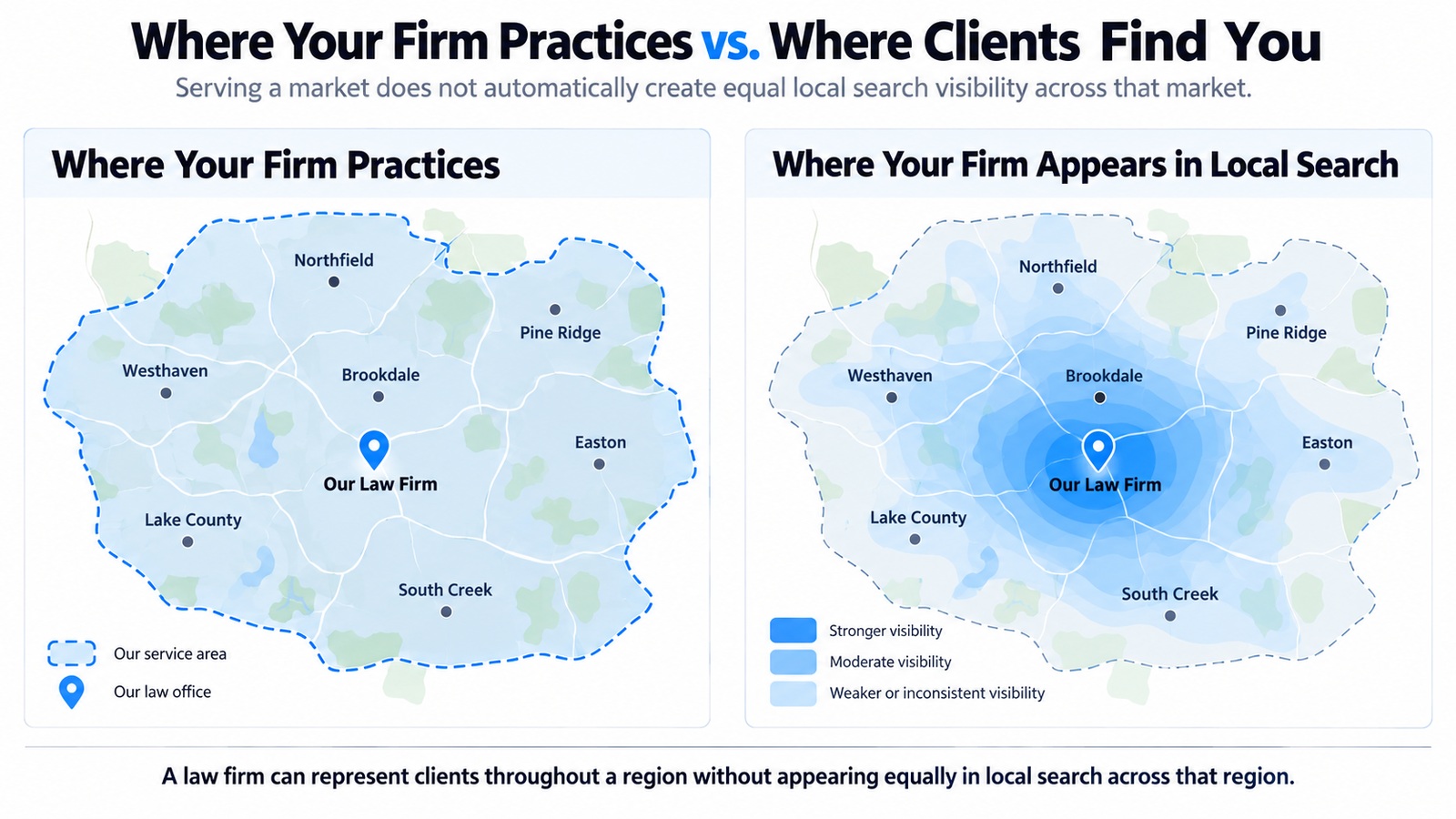
Law firms don't always compete within neatly defined geographic boundaries. A firm might maintain one office while representing clients throughout several counties, an entire metropolitan area, or even multiple states. But its ability to serve those clients doesn't automatically translate into local search visibility across those markets.
Google's local results depend partly on the distance between the searcher and the businesses it considers relevant. That means a firm with strong visibility near its office might appear less frequently in searches from surrounding communities, even when its attorneys regularly handle cases there.
Legal & Business Reach
Where Your Firm Practices
A criminal defense firm handles DWI cases across several counties, even though it maintains only one physical office. Its geographic reach depends on practical considerations:
- Courts and jurisdictions where its attorneys practice
- Experience with local courts and procedures
- Travel demands and available staff
- Case types the firm wants to pursue in each market
Marketing & Search Visibility
How Clients Find Your Firm
The same criminal defense firm may reach prospective clients differently across those counties. Its visibility depends on where and how people search:
- Google Maps visibility near its physical office
- Organic rankings for DWI searches in surrounding communities
- Paid advertising targeting particular geographic markets
- Local directories and other sources of attorney referrals
A criminal defense firm doesn't necessarily need another office to attract clients from surrounding counties. Improving organic visibility for the cases it handles, making its geographic reach clearer on its website, and prioritizing the markets where it wants more business offer different ways to reach those clients.
Legal jurisdictions add another consideration. The markets a firm wants to reach must align with where its attorneys are authorized to practice. Firms operating across state lines should account for individual attorney admissions and applicable licensing restrictions when describing their services.
Local Competition Changes by Practice Area and Case Type
Not every law firm wants the same clients, even when its attorneys practice in the same city. Firms within the same practice area pursue different types of cases, which changes the searches and geographic markets worth targeting.
DWI defense: Focus on counties where the firm's attorneys regularly appear in court, rather than targeting every city in the metro.
Federal criminal defense: Target specific federal charges across a larger region, with less emphasis on proximity to the firm's office.
General accident claims: Build visibility in communities that consistently generate inquiries and support the firm's desired case volume.
Catastrophic injuries: Prioritize searches involving specific injuries and complex claims instead of competing for every broad accident-related term.
Uncontested divorce: Reach nearby clients seeking straightforward representation, an efficient process, and predictable fees.
High-asset divorce: Target business owners and clients with substantial marital assets through searches and content addressing complex financial issues.
Local SEO should reflect the cases a firm actually wants to accept, not simply the practice areas listed on its website. Geographic priorities depend on the firm's preferred case types and capacity to handle the work.
How Law Firms Build Local Search Visibility
Improving local search visibility involves more than adding city names to a website or creating a Google listing. Law firms need to establish where they operate, which legal services they provide, and why prospective clients should consider them.
Google Business Profile Management
A Google Business Profile helps a law firm appear in Google Search and Maps with its business information, office location, reviews, and contact options.
Managing that profile means keeping office details, categories, hours, and contact information current while following Google's eligibility and verification requirements. Google Business Profile management for law firms also involves decisions about attorney listings and office eligibility.
Local SEO & Website Relevance
Local SEO connects the firm's website and broader online presence to the geographic markets it serves. That includes relevant practice-area content, accurate business information, and credible references from other websites.
The objective isn't to create a separate page for every city. It's to help search engines and prospective clients understand where the firm provides legal services and which matters it handles.
Reviews & Online Reputation
Prospective clients often compare law firms before making contact. Public reviews, professional credentials, and outside recognition help people evaluate whether a practice appears credible and relevant to their needs.
Managing law firm reviews and reputation includes requesting feedback appropriately, responding professionally, and protecting client confidentiality. Reputation matters beyond any potential contribution to search rankings.
Multiple Offices & Geographic Markets
Firms with multiple offices have additional decisions to make about business profiles, location pages, contact information, and which attorneys serve each location. A single-office firm targeting several communities faces a different challenge.
Multi-location SEO addresses those differences without treating every target city as another physical office or creating unnecessary duplicate pages.
What Influences Local Search Rankings for Law Firms?
Google doesn't rank law firms solely by which has the most reviews, the largest website, or the closest office. For local business results, Google identifies three primary considerations: relevance, distance, and prominence.
| Ranking Factor | What It Means for Your Firm |
|---|---|
| Relevance | Google considers how closely your business profile matches the search. Accurate categories and information about the legal services you provide help establish that connection. |
| Distance | Your office's proximity to the search location influences where you appear. A firm can serve an entire metropolitan area without appearing equally prominently in every neighborhood. |
| Prominence | Google considers how established and well-known your business is, using information such as online reviews and references from other websites. Your reputation beyond your own website matters here. |
Google doesn't disclose the precise weight of each ranking factor, and businesses can't pay for better placement in its local rankings. Its local ranking guidance explains the factors and steps businesses can take to improve their visibility.
AI Search & Local Law Firm Visibility
AI search gives prospective clients another way to find attorneys in their area. Rather than browsing Google Maps or comparing individual websites, someone might describe their legal problem and ask an AI tool to identify relevant local firms.
People don't always know the legal terminology for their situation. They might describe an incident, mention where they live, or ask follow-up questions before looking for representation. These examples show how location and legal needs shape AI-assisted searches.
Searching Nearby
Example: "Find a personal injury lawyer near me who handles motorcycle accidents."
The search combines proximity with a specific case type, making accurate business information and relevant practice details important.
Searching by City
Example: "Which estate planning attorneys in Denver handle special needs trusts?"
The person identifies both a geographic market and a specialized legal service. The firm's website needs to communicate whether it handles that work.
Comparing Local Firms
Example: "Compare family law firms in Charlotte based on their experience and client reviews."
The search asks for more than nearby offices. Attorney experience, publicly available credentials, and client reviews provide information for comparing firms.
AI platforms may draw on different information sources, and traditional local rankings don't guarantee an AI recommendation. Accurate business information and a credible online presence support a firm's broader AI search visibility.
Local Search & Business Value for Law Firms
Local search visibility puts a law firm in front of potential clients in the markets where it wants to compete. For an established practice, that means opportunities to attract more cases from surrounding communities. For a newer firm, it means building recognition where competitors already have a significant presence.
The business value comes from attracting the right inquiries, not simply appearing in more search results. A firm receiving dozens of calls about matters it doesn't handle may be getting plenty of attention without gaining much from its marketing investment.
What Should Your Law Firm Measure?
A useful local search report should connect visibility to inquiries, consultations, and retained clients. These four measurements help show where marketing efforts are producing results.
Local Search Visibility
Track how the firm appears for relevant practice-area searches across its target markets. Rankings may change by location, so a single search from the office doesn't tell the whole story.
Google Business Profile Activity
Review calls, website clicks, and direction requests generated through the firm's business profile. These interactions help show whether local visibility is producing interest.
Website Inquiries & Consultations
Look at calls and form submissions from organic visitors, including which practice areas and geographic markets attract inquiries.
Qualified Leads & Retained Cases
Connect local marketing activity to consultations and actual clients whenever possible. Intake records can reveal whether inquiries match the firm's services, jurisdiction, and business priorities.
Making Local Search Work for Your Law Firm
Not every law firm needs to compete aggressively across an entire metropolitan area. A smaller practice with a reliable referral network can concentrate on improving visibility close to home. A regional firm entering new markets needs a broader strategy to establish its presence and attract clients in those communities.
Local search should support the firm's growth strategy. Better rankings are useful when they lead to meaningful opportunities. If visibility improves but qualified inquiries don't, it's worth examining where those inquiries originate and whether the strategy still matches the practice's goals.
The right approach depends on where your firm operates, the clients you want to reach, and how much you're prepared to invest in reaching them. Local search isn't about appearing everywhere. It's about being found where your firm can make a difference.