

SEO Content for Law Firms
Part 1, Chapter 3: SEO Content for Law Firms
Table of contents
Someone searches for what happens after a first DWI arrest and clicks a law firm's website. The page makes a compelling case for hiring the firm, but never explains what happens after an arrest. It may persuade someone to call, but it leaves the original question unanswered.
Effective legal SEO content needs to be useful and persuasive. Practice-area pages, legal articles, guides, and FAQs should address the questions that bring people to a website while demonstrating the firm's knowledge. Useful information supports search relevance, builds credibility, and gives prospective clients a reason to take the next step.
Key Takeaways
- Match content to search intent. Attracting relevant visitors matters, but the information must deliver what they came looking for.
- Different content serves different purposes. Practice-area pages, legal guides, attorney profiles, and visual resources contribute to visibility and client decisions in different ways.
- Legal accuracy builds trust. Relevant expertise, reliable information, and jurisdiction-specific details matter more than generic promotional claims.
- Measure and maintain performance. Monitor search visibility and inquiries, then revisit content as laws, competition, and the firm's services change.
Legal SEO Content Checklist: Is Your Page Ready?
Not every page needs to target a competitive keyword, but every page should have a purpose. Before publishing another legal article or practice-area page, consider what it's supposed to accomplish and what makes it worth adding to your website.
| Question | What to Consider |
|---|---|
| Is the topic too broad? | Does the page try to answer too many unrelated questions instead of addressing a clear subject? |
| Is it too narrow? | Is there enough reader interest or business value to justify a dedicated page, or would the subject fit better within existing content? |
| What's the page's job? | Is it targeting relevant searches, explaining a service, or serving as a supporting resource? Not every page needs the same SEO objective. |
| Does it meet SEO basics? | Check the page title, headings, organization, internal links, and how clearly the content addresses its subject. |
| Is it copied or repetitive? | Does it duplicate another page, reuse generic copy, or repeat information already covered elsewhere on the website? |
| What makes it useful? | Does it offer accurate legal information, relevant examples, jurisdiction-specific context, or insight from the firm's experience? |
| Is there a useful next step? | Can readers contact the firm, find a relevant service, or continue researching through a related resource? |
Writing Useful SEO Content for Law Firms
Search intent should shape what a legal page actually says. Someone searching for how long a divorce takes needs to understand why timelines vary, what might delay a case, and how state law or their circumstances affect the answer. A generic pitch for the firm's family law services doesn't address that need.
Effective legal SEO content generally does four things:
1. Answers the Main Question: Give readers useful information early rather than burying it beneath introductions, promotional language, or unnecessary background.
2. Explains What Matters: Address important distinctions, common misunderstandings, and circumstances that might change the answer. Make clear when information depends on state law or individual facts.
3. Makes Complex Information Understandable: Explain legal concepts in language prospective clients can follow. Use legal terminology when necessary, but don't assume readers already understand it.
4. Fits Into the Website: Give the page clear headings, a logical place in the site's structure, and relevant internal links. The site's technical SEO also plays a role in whether search engines can discover and index it.
What Types of SEO Content Should Law Firms Publish?
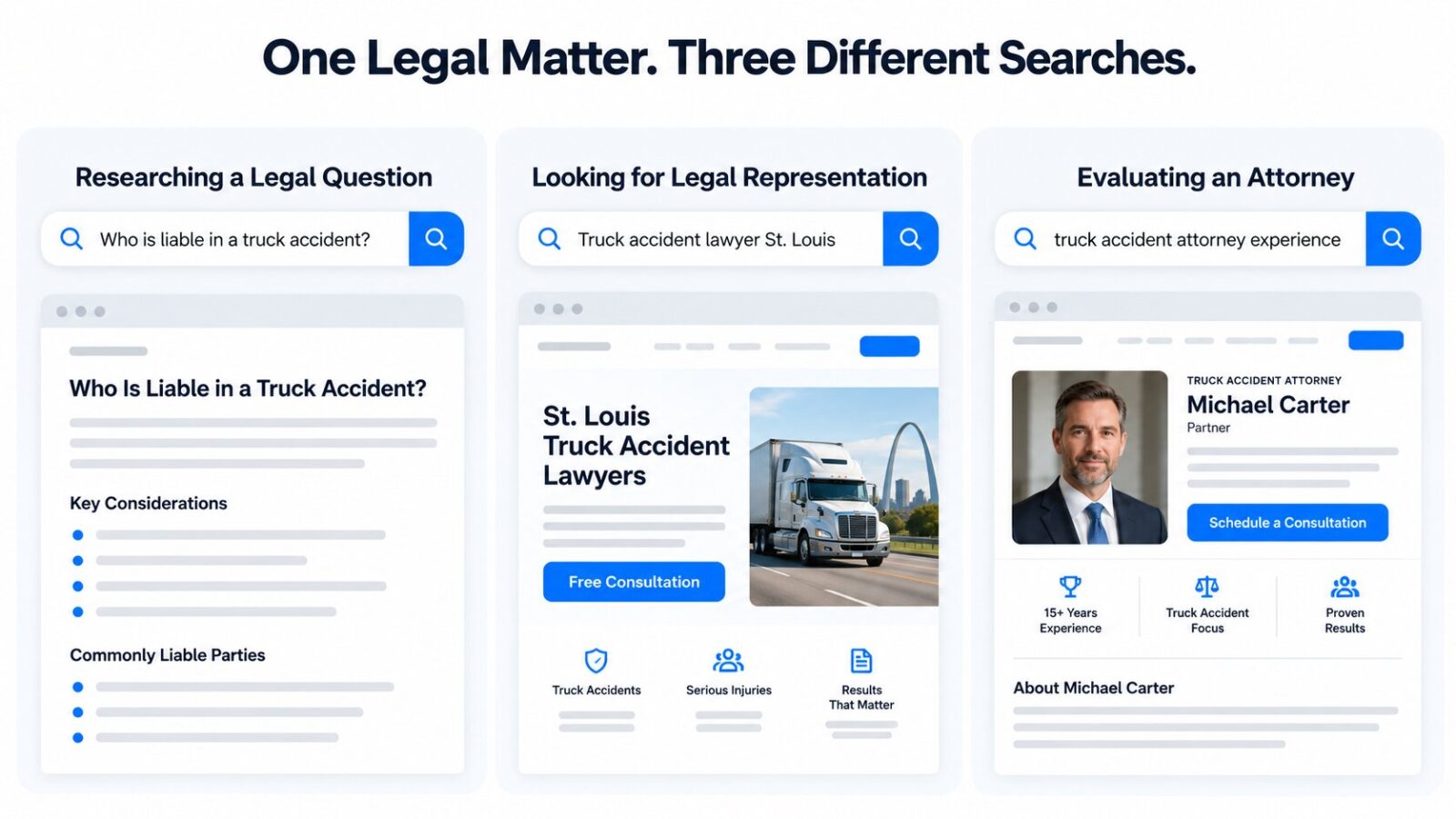
Law firm SEO content goes beyond blog posts. Some pages reach people who are ready to hire an attorney. Others answer legal questions, establish professional credibility, or help visitors decide if a firm is right for them. Not every piece of content needs to rank independently to be worth publishing.
Practice-Area & Case-Type Pages
These pages target people searching for legal representation and explain the matters a firm handles. For example, a criminal defense firm might have a primary service page covering its practice, with dedicated pages for DWI defense, drug charges, and probation violations.
Individual pages should reflect meaningful service distinctions, not exist solely to target another keyword.
Legal Articles, Guides & FAQs
Educational resources reach people researching legal questions and support related practice areas. A Missouri estate planning firm, for example, might publish answers to questions like:
- What happens when someone dies without a will in Missouri?
- Does every estate need to go through probate?
- When should an estate plan be updated?
These resources need a logical place within the firm's website structure, connections to relevant services, and accurate information about applicable laws.
Attorney Bios & Demonstrating Expertise
Readers should be able to evaluate the people behind the legal advice. Attorney biographies can establish professional identity through education, bar admissions, experience, and practice focus. Identifying attorneys who write or review legal resources also helps readers assess the source of that information.
Specific, verifiable credentials carry more weight than generic claims about dedication or excellence.
Video, Photography & Visual Resources
Original media gives visitors different ways to evaluate the firm and understand complicated legal subjects. Images and videos can also create additional search visibility when published with appropriate context.
Video: Attorney introductions, common questions, and explanations of legal processes
Photography: Actual attorneys, staff, offices, and working environments
Infographics & Diagrams: Legal timelines, procedures, and concepts that benefit from visual explanation
Case Results, Testimonials & Supporting Evidence
Case results, client testimonials, and professional recognition can substantiate a firm's experience and help prospective clients evaluate its reputation. Their value is primarily in building confidence rather than targeting additional keywords.
Accuracy matters here. Published claims must respect client confidentiality and applicable attorney advertising rules. Past results should never imply guaranteed outcomes.
Should Law Firms Outsource SEO Content Writing?
Attorneys don't need to write every word on their firm's website. Professional writers and marketing teams can interview attorneys, organize their knowledge, and turn it into useful content. Attorneys should still review legal explanations, jurisdiction-specific details, and claims about the firm's services or experience.
AI tools can also assist with production, but using AI to write and market a website doesn't replace informed review or a good reason to publish something. More content doesn't automatically mean better rankings. A dozen repetitive practice-area pages may offer less value than a few accurate resources that reflect the firm's actual expertise.
On-Page SEO for Legal Content
On-page SEO helps search engines understand what a page covers and how it relates to relevant searches. Titles, headings, internal links, and supporting media give content structure while making it easier for visitors to find useful information.
Consider a personal injury firm's car accident and commercial truck accident pages. The services are related, but their content should reflect meaningful differences rather than simply targeting different keywords.
Page Titles & Search Descriptions
Give truck accident content a descriptive page title rather than a generic label like "Personal Injury Services." Meta descriptions summarize the page for search results, although Google sometimes generates its own snippets from the content.
Headings & Content Focus
A truck accident page shouldn't repeat a car accident page with different keywords. Commercial vehicle accidents raise distinct questions about trucking companies, liability, regulations, and evidence. Organize the headings and content around those differences.
Internal Links & Supporting Sources
Connect truck accident content to relevant injury services, related legal resources, and authoritative information about commercial vehicle regulations. Give readers useful context and clear paths to additional information.
Images & Supporting Media
Original photography, diagrams, and videos add context to legal explanations and offer opportunities for image and video search visibility. Descriptive filenames, meaningful alt text, and relevant surrounding content help search engines understand those assets.
What About Off-Page SEO?
Off-page SEO involves signals and activity beyond the firm's website. Backlinks from reputable websites, mentions in legal publications, and professional directory profiles can support a firm's authority and online visibility. Link building is one part of that work.
Good legal content can contribute to off-page SEO by giving other websites useful information worth referencing. But publishing an article doesn't automatically earn backlinks or improve rankings. Building credibility outside the website requires its own effort.
Why Does Trust Matter for Legal SEO Content?
Inaccurate legal information can have consequences beyond poor search rankings. Someone researching a filing deadline, divorce requirement, or criminal penalty may use that information to make an important decision. Two concepts from Google's search quality guidance help explain why accuracy and credibility matter so much for legal content.
E-E-A-T: Experience, Expertise, Authoritativeness & Trustworthiness
Google's helpful content guidance emphasizes these qualities, particularly trust. E-E-A-T isn't a numerical score or standalone ranking factor. For law firms, demonstrating real legal knowledge matters more than relying on generic claims of expertise.
YMYL: Your Money or Your Life
Legal information often falls within Google's YMYL classification, where inaccurate advice could affect someone's rights, finances, or safety. Google places greater emphasis on trustworthiness for these subjects, making reliable sources and professional review especially important.
Consider a guide explaining eligibility for expunging a criminal record in Missouri. It should reflect current state law, explain relevant limitations, and identify qualified sources or reviewers. Putting an attorney's name on inaccurate content doesn't make it trustworthy. The information itself needs to reflect the firm's knowledge and professional accountability.
How Do You Know Your Law Firm's SEO Content Is Working?
Your firm publishes a new wrongful termination page. It's accurate, professionally written, and looks better than the competition. Months later, it hasn't generated a single inquiry. A polished page doesn't guarantee rankings, traffic, or clients. The question is where the opportunity is being lost.
Search Visibility
Google Search Console shows whether the page appears in search results, which queries generate impressions, and how often people click. Limited visibility could point to competition, low search demand, indexing problems, or content that doesn't match relevant searches.
Website Visits & Engagement
Appearing in search results doesn't mean people will visit. Look at which searches bring visitors to the page and what they do after arriving. If traffic is limited or visitors quickly lose interest, the content might not be meeting their expectations.
Qualified Inquiries
Contact forms, phone calls, and intake feedback help establish whether traffic is turning into potential clients. A practice-area page targeting people ready to hire should be evaluated differently from a legal guide answering early research questions. Measure each page against its purpose before deciding what needs improvement.
Your Legal Content Works. What Now?
SEO content is an ongoing investment, not a one-time publication. Once a page is performing, keeping it relevant and accurate deserves just as much attention as getting it published.
- Stay Current With the Law: Review legal explanations when statutes, regulations, filing requirements, or other important requirements change. Information that was accurate when published might not stay that way.
- Keep Firm Information Updated: Attorneys join or leave, services evolve, and contact details change. Make sure the website reflects the firm as it operates today.
- Watch for Performance Changes: A page that once attracted relevant visitors might lose visibility or stop producing inquiries. Investigate meaningful declines and determine if the content needs attention.
- Improve Before Adding More: Revisit existing articles, update outdated resources, and consolidate repetitive pages before investing in another round of new content.
SEO Content for Law Firms FAQs
Q: What's the difference between SEO, AEO, and GEO content?
A: SEO focuses on visibility in search results, AEO emphasizes clear answers to specific questions, and GEO concerns visibility within generative AI experiences. These approaches overlap. Well-researched legal content can support all three, so firms don't need three separate publishing strategies. Learn more about AI search for law firms.
Q: How much does professional SEO content cost for a law firm?
A: Costs depend on research, legal review, content volume, and the services involved. Hiring a writer for individual articles is different from working with a marketing agency. For comparison, Hexxen's marketing packages range from $1,250–$1,850 per month for Foundation to $2,250–$3,500 per month for Competitive, plus setup fees. These packages include SEO content alongside other marketing and website services rather than charging a fixed price per article.