

Local SEO for Law Firms
Part 3, Chapter 2: Building Your Firm's Visibility in Local Search
Table of contents
Someone searching for a personal injury attorney in a specific city isn't necessarily looking for a law firm down the street. They might need an attorney who handles cases in their county, knows the local courts, or regularly represents clients throughout the surrounding region.
Local SEO connects your law firm's services with the geographic markets it serves. Beyond Google Business Profile, your website establishes where your attorneys practice, which cases they handle, and why they're relevant to local searches. The challenge is building that visibility without relying on repetitive city pages or misrepresenting your firm's local presence.
Key Takeaways
- Local SEO goes beyond Google Maps and paid ads. Your firm's website also competes in traditional organic search results.
- Geographic relevance matters. Search engines need to understand where your attorneys practice and which communities they serve.
- Practice areas and locations work together. Your website should connect relevant legal services with the markets where your firm handles cases.
- Local content needs substance. Useful information about your practice and its geographic reach matters more than repeating city names throughout your website.
What Does Local SEO Do for Law Firms?
Local SEO connects your law firm's website with legal searches in the geographic areas you serve. Some searches include a city or county name, while others rely on Google interpreting the searcher's location. But proximity isn't always the deciding factor when someone needs an attorney.
Consider how geography influences three different searches:
Searching Near Home
Someone facing criminal charges wants an attorney with a nearby office where they can meet in person and discuss their case.
"criminal defense attorney near me"
Searching Within a Jurisdiction
Someone facing criminal charges in Cook County, Illinois needs an attorney familiar with its courts, even if that means traveling farther to meet with them.
"criminal defense lawyer Cook County IL"
Searching Across a Metro Area
Someone facing serious criminal charges in the Dallas–Fort Worth area is willing to travel beyond their neighborhood to find an attorney with experience handling similar cases.
"Dallas Fort Worth criminal defense law firm"
These searches involve different geographic priorities. A useful local SEO strategy accounts for where prospective clients live, where their legal matters arise, and where your firm can represent them.
Local Organic Results vs. Google Maps
Google often displays business profiles and traditional website results for local legal searches. Both help prospective clients find attorneys, but they serve different purposes.
Google Maps & Business Profiles
Highlight individual businesses, office locations, reviews, and contact details. A well-managed Google Business Profile helps prospective clients find your firm, evaluate its reputation, and make contact.
Local Organic Search Results
Connect searchers with relevant website pages, including practice areas, office locations, and information about legal issues in a particular market.
Establishing Local Relevance for Your Law Firm
Your law firm's physical location and the geographic areas it serves aren't always the same. Local SEO helps communicate both, connecting your website with prospective clients searching for legal representation in the communities and jurisdictions where your attorneys practice.
Local Presence
Where Your Firm Is Located
A law firm with an office in St. Louis establishes its physical presence through its address, contact information, and connections to the surrounding community.
- Accurate office addresses and contact information
- Consistent business details across the website and local listings
- Office-specific information that helps clients find and visit the firm
Geographic Reach
Where Your Firm Practices
That same St. Louis firm might represent clients throughout surrounding communities without maintaining offices in each location.
- Cities and counties where attorneys regularly accept cases
- Courts and jurisdictions relevant to the firm's legal services
- Practice area content connecting legal services with those markets
Creating Location-Specific Content for Your Law Firm
Location-specific content connects your firm's legal services with the communities it serves. The challenge is deciding where geographic information belongs, which markets deserve dedicated pages, and what makes that content useful.
1. Organize Content Around Services and Locations
A clear website structure helps visitors and search engines understand how your firm's services relate to the markets it serves.
- Practice area pages explain what the firm handles and can establish relevance to the jurisdictions where those services are available.
- Office and location pages provide geographic context, including where clients can visit and which surrounding communities the firm serves.
2. Give Individual Markets a Reason to Have Their Own Pages
A dedicated city or county page should serve a distinct purpose. Keyword research can help identify where local demand exists, but search volume alone doesn't justify a page. The content should reflect the firm's work in that jurisdiction, address relevant local considerations, or help prospective clients understand their options. Repeating the same page with different city names doesn't establish meaningful local relevance.
3. Make Local Content Useful to Prospective Clients
Strong local content answers questions that matter to someone seeking representation in that area. Depending on the practice, that could include:
- Local legal context: Applicable state laws, court jurisdictions, or procedures that affect how a case may proceed.
- Working with the firm: The types of matters its attorneys handle locally and how clients in that market can access representation.
Writing Content for Local Legal Searches
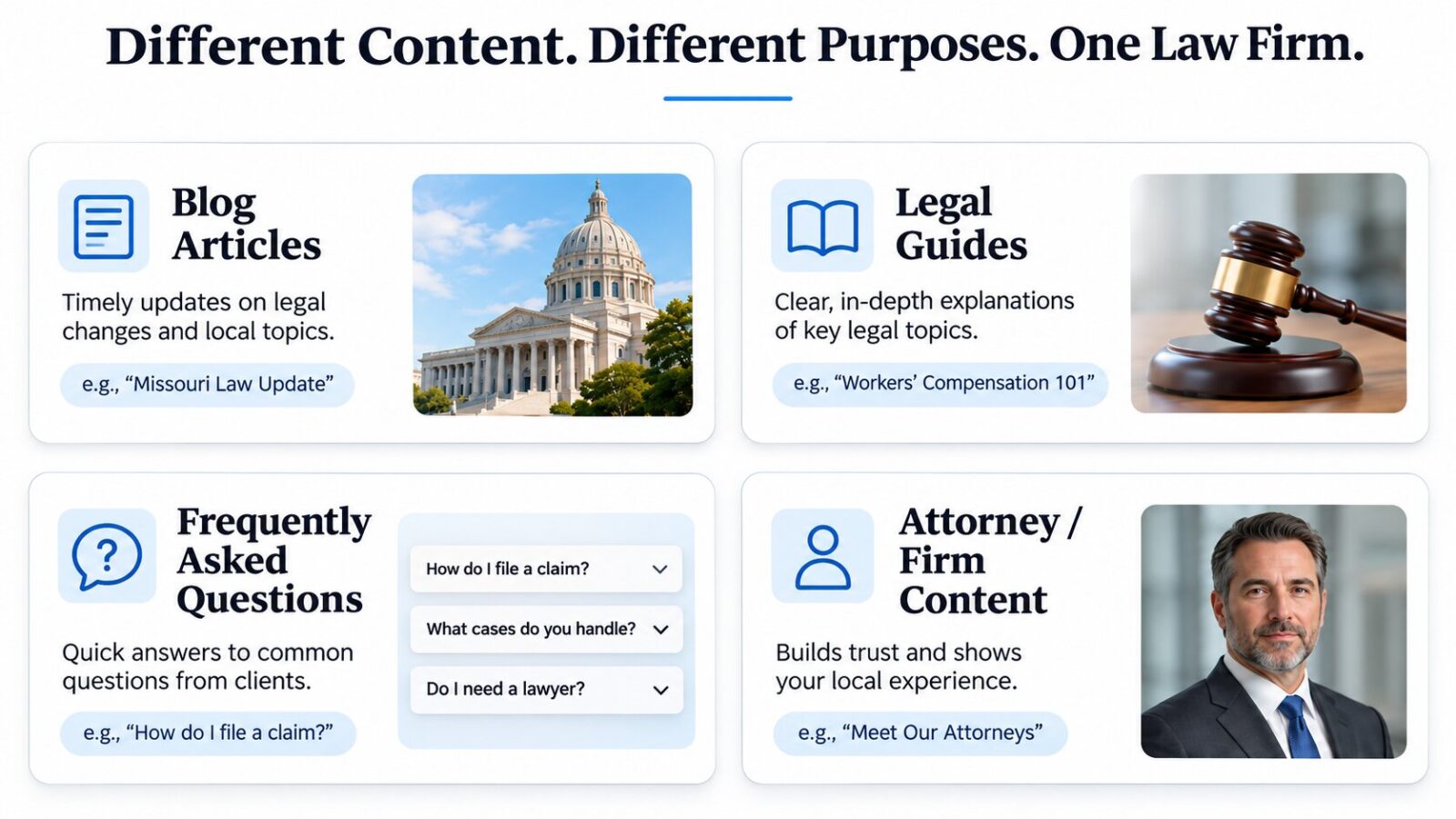
Effective SEO content should address what prospective clients are actually looking for. Local legal content builds on that foundation by addressing relevant laws, jurisdictions, and questions specific to the communities a firm serves.
Blog Articles
Address timely legal developments affecting a particular market, such as changes to state laws or local court procedures.
Legal Guides
Explain broader legal issues within a specific jurisdiction, such as filing a workers' compensation claim in Illinois.
Frequently Asked Questions
Answer practical questions about local representation, including where cases are heard or which communities a firm serves. Clear answers can also support visibility in AI search.
Writing With Intent
Not every page needs to generate organic clicks to contribute to your firm's online presence. Attorney biographies, case results, client testimonials, and stories about the firm's work can demonstrate experience and build trust. These pages give prospective clients more reasons to choose your firm and add substance to its broader online identity. Their value isn't always reflected in search traffic alone.
Building Local Authority Beyond Your Website
Your law firm's local visibility isn't determined by its website alone. Legal directories, business listings, professional associations, and local organizations can all contribute to its online presence. These external references help people discover your firm and provide additional context about its connection to the communities it serves.
Local Citations & Business Listings
A local citation is an online reference to your law firm, often including its name, address, and phone number. Citations appear in legal directories, professional associations, and other business listings. Together with your Google Business Profile, they help establish a consistent public identity for your practice.
Not every directory deserves equal attention. Established legal directories and relevant local organizations are generally more useful than obscure listing sites. Some platforms also sell enhanced profiles or leads, which are separate considerations covered in legal directories and paid lead platforms.
Local Backlinks & Community Connections
A backlink is a link from another website to yours. Relevant links from credible organizations, publications, and professional resources can support your website's authority in organic search.
Professional activity and community involvement can create opportunities for local backlinks and other valuable exposure. Examples include:
- Local news coverage: Attorneys quoted as sources or featured for their work on relevant legal issues.
- Professional associations: Attorney profiles, speaking engagements, and participation in local legal organizations.
- Community involvement: Sponsorships, educational events, and partnerships with established local organizations.
Not every mention creates a backlink or directly improves rankings. Social media activity and community announcements can still build recognition, strengthen relationships, and generate referrals. Local visibility has value beyond SEO alone.
Keep Your NAP Consistent
NAP stands for Name, Address, and Phone Number. These details should accurately identify your firm across its website, Google Business Profile, legal directories, and other listings. Consistency becomes especially important after an office relocation, rebranding, or phone number change. The goal isn't identical formatting everywhere, but accurate information that helps clients reach the right firm at the right location.
Measuring Local SEO Performance
Local SEO performance should be measured by more than rankings. A law firm might gain visibility across several cities without attracting more qualified clients. The important question is whether that visibility reaches people who need the legal services the firm provides.
| What to Measure | What It Tells Your Firm |
|---|---|
| Local Search Visibility | Rankings and search impressions help show where your firm appears for relevant practice areas and geographic searches. Results should be evaluated across target markets rather than relying on a single search from one location. |
| Organic Website Traffic | Traffic to practice area pages, location pages, and local legal resources helps identify which content attracts visitors. Search Console and website analytics can reveal trends, although they don't always identify precisely where each searcher was located. |
| Qualified Inquiries | Calls, form submissions, consultations, and retained cases reveal whether local visibility contributes to business growth. Lead quality matters, particularly when a firm serves several jurisdictions or handles different types of legal matters. |
Looking Beyond Rankings
Local SEO metrics become more useful when evaluated together. A city might produce growing search impressions but few inquiries, while another market generates valuable consultations from relatively modest traffic. Those differences can help a firm decide where to focus its marketing efforts.
Rankings also vary by search location, competition, and the specific legal service involved. The goal isn't to rank everywhere. It's to build visibility in markets where your attorneys can attract and represent the right clients.