

Turning Website Visitors Into Law Firm Leads
Part 4, Chapter 1: Converting Website Traffic Into Client Inquiries
Table of contents
Someone visits your law firm's website after searching for help with a legal problem. They might read about your services, review an attorney's experience, or look for answers to a specific question. But visiting your website doesn't mean they'll contact your firm.
Turning website visitors into law firm leads means giving prospective clients the information, confidence, and opportunity to take the next step. That involves more than placing a phone number at the top of every page. The website needs to address what brought someone there and make contacting your firm feel like a reasonable next move.
Key Takeaways
- Website traffic isn't the same as client interest. Visitors arrive with different questions, needs, and levels of readiness to contact an attorney.
- Clarity and credibility influence decisions. Relevant legal information, attorney experience, and a professional website help prospective clients evaluate the firm.
- Contacting your firm should be straightforward. Clear calls to action, accessible contact options, and mobile usability help reduce unnecessary obstacles.
- Conversions should reflect meaningful inquiries. Calls and form submissions matter most when they connect the firm with prospective clients it can actually help.
Types of Website Conversions for Law Firms
A website conversion happens when a visitor completes an action the website is intended to encourage. For law firms, that typically means taking a step toward becoming a client, such as contacting the firm to discuss a legal matter or request a consultation.
A conversion may include:
- Phone calls: A site visitor calls the firm to discuss a legal matter, get more information, or request a consultation.
- Contact form submissions: Someone shares their information and a brief description of the help they need.
- Consultation requests: A visitor schedules an appointment or submits a request to speak with an attorney.
- Live chat inquiries: Someone starts a conversation that results in a meaningful request for legal assistance.
Conversions vs. Leads
What counts as a conversion depends on what the website or individual page is intended to accomplish. A law firm might track visits to its attorney profiles, downloads of a free PDF guide to Nebraska probate law, or newsletter signups. Each action can indicate interest or serve a specific marketing purpose. But not every conversion represents a lead.
These interactions can still build awareness and recognition. Someone downloading a probate guide might not need an attorney today, but the information could make your firm the first one they think of when they eventually do. That familiarity has marketing value, even if the visitor never submits a contact form or calls your office.
What Helps Turn Website Visitors Into Law Firm Leads?
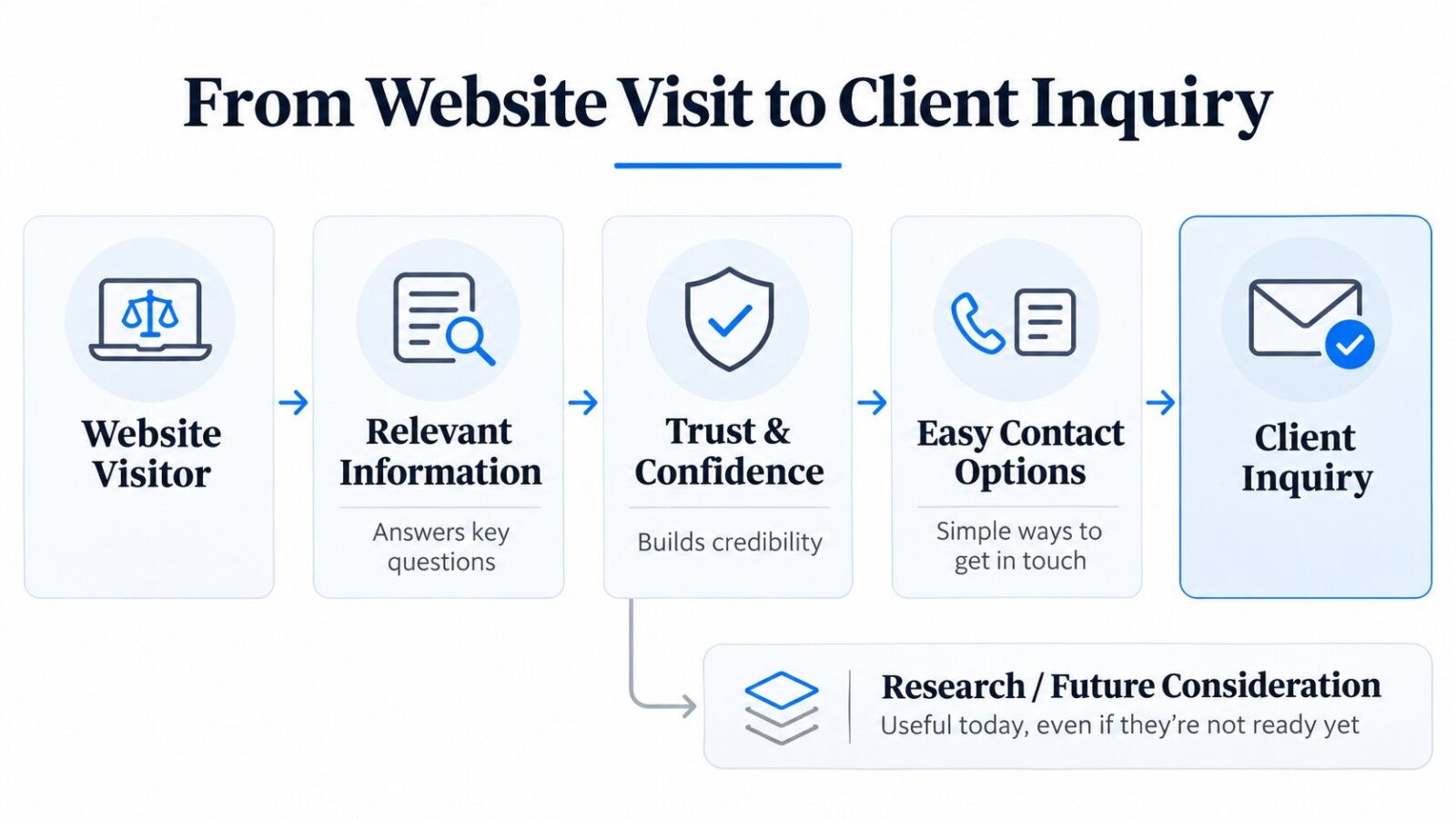
A law firm website needs more than traffic and a visible phone number to generate inquiries. Visitors should understand what the firm does, find information relevant to their situation, and feel confident about contacting its attorneys. Four website elements help bring those pieces together.
Clear Messaging
Visitors should quickly understand what legal services the firm provides, who it represents, and where it practices. Attorney experience, credentials, and past results can help establish credibility, but those strengths should appear alongside clear information about the legal matters the firm handles.
For example, "Experienced Attorneys Fighting for You" says much less than a headline identifying the firm's personal injury practice and the communities it serves. Clear messaging should carry through the firm's website structure, navigation, and individual service pages.
Relevant Content & Visitor Intent
Not everyone arrives with the same question or urgency. Effective law firm website content should reflect what visitors are trying to accomplish, whether they're ready to hire an attorney or still researching their options.
- Immediate legal needs: Clear practice-area information, consultation options, and explanations of how the firm can help.
- Research and comparison: FAQs, educational articles, attorney backgrounds, and information about the legal process.
- Future considerations: Helpful resources that build familiarity with the firm before someone needs representation.
Trust & Credibility
Contacting an attorney may involve discussing sensitive information, financial concerns, or a difficult personal situation. Prospective clients need reasons to believe the firm is qualified, professional, and capable of helping them.
Attorney biographies, relevant experience, professional credentials, and client reviews help establish that confidence.
Consider someone comparing two estate planning firms. Both offer similar services, but one provides detailed attorney backgrounds, explains its consultation process, and features credible client feedback. Those details give the visitor more to evaluate than a generic promise of excellent service.
Calls to Action & Easy Contact Options
Once someone decides the firm may be a good fit, the next step should be obvious. Calls to action should explain what the visitor can do, whether that's requesting a consultation, calling the office, or submitting information about a potential case.
The invitation also needs to fit the situation. Someone reading about a personal injury claim may appreciate a direct consultation request, while a visitor researching estate planning might prefer an invitation to discuss their options. A clear next step gives interested visitors a practical way to act on their decision.
Improving Web Conversion Rates for Law Firms
Attracting more website traffic isn't the only way to generate additional leads. Conversion rate optimization (CRO) focuses on improving how effectively a website turns existing visitors into meaningful actions. By reviewing visitor behavior, identifying obstacles, and testing changes, law firms can make more of the traffic they already receive.
For law firms, improvements often begin with a few practical areas:
Mobile Experience
Make it easy to read practice-area information, navigate the website, and contact the firm from a phone without awkward menus or difficult forms.
Contact Forms
Review how much information visitors must provide. A prospective client requesting an initial consultation shouldn't have to complete an extensive questionnaire just to start a conversation.
Calls to Action
Evaluate whether contact options appear at useful points throughout the website. A relevant invitation after an explanation of legal services may be more effective than a generic button buried in the footer. Example: Test adding a consultation button halfway through a practice-area page and compare how many visitors use it.
Page Performance
Check for slow-loading pages, broken forms, and other technical issues that interrupt visitors before they can complete an inquiry.
CRO isn't about changing everything at once. Firms can identify a potential problem, make a targeted improvement, and compare conversion activity afterward. More conversions only represent progress when those actions have value to the firm.
Paid Advertising & Conversion Tracking
Conversion tracking isn't limited to actions taken directly on a law firm's website. Platforms such as Google Ads can also track calls made directly from advertisements, lead form submissions, and other actions associated with a campaign.
A visitor who clicks an advertisement and submits a consultation request on the firm's website may appear in both website analytics and advertising reports. Someone who calls directly from an ad, however, might never visit the website at all.
When evaluating advertising costs, law firms need to understand what they're paying for and what each platform counts as a conversion. A reported conversion isn't automatically a qualified lead or a new client.
Why More Website Traffic Doesn't Always Mean More Clients
A law firm can attract thousands of website visitors without generating many worthwhile inquiries. Another firm might receive a fraction of that traffic and consistently connect with prospective clients. The difference often comes down to who's visiting, what they find, and whether they have a compelling reason to make contact.
More Traffic, Fewer Leads
A Busy Website That Struggles to Convert
A law firm attracts substantial search traffic through articles and broad legal topics, but relatively few visitors contact its attorneys.
- Many visitors are outside the firm's service area or practice focus
- Pages attract research traffic without connecting visitors to relevant services
- Contact options are difficult to find or use
- The website offers limited reasons to choose the firm
The result: Strong traffic numbers don't necessarily translate into business opportunities.
Less Traffic, More Qualified Leads
A Focused Website That Generates Inquiries
Another firm receives fewer visitors, but its website consistently reaches people seeking the legal services it actually provides.
- Visitors are more likely to need the firm's services in its geographic market
- Practice-area content addresses relevant questions and concerns
- Attorney experience and client feedback support credibility
- Clear contact options make requesting help straightforward
The result: Fewer visits can produce more valuable opportunities for the firm.
Website conversions don't exist in isolation, either. A prospective client might hear about an attorney through a friend, recognize the firm's name from local advertising, or receive a referral from another professional. They may still visit the website before deciding whether to call.
Word of mouth can bring someone to the door, but the website still influences whether they walk through it. Relevant information, credibility, and a straightforward path to contact help turn that initial interest into an actual inquiry.
Law Firm Website Conversion FAQs
Q: Do I need to pay for Google Ads to get leads from my law firm's website?
A: No. Prospective clients can find your firm through organic search, local results, referrals, and other sources without clicking an advertisement. Paid advertising can help attract additional visitors, but the website still needs to give those visitors a reason to contact the firm.
Q: Why do people visit my law firm's website but never contact us?
A: Some visitors are simply researching a legal issue and aren't ready to hire an attorney. Others may be comparing firms, looking for services you don't provide, or struggling to find the information they need. A lack of inquiries isn't always a website problem, but consistently losing interested visitors may indicate opportunities to improve messaging, credibility, or contact options.
Q: Can my law firm's website generate more leads without attracting more traffic?
A: Yes. Improving existing pages, simplifying contact forms, and making consultation options more accessible can help convert more of the traffic your firm already receives. The value of those improvements depends on whether the additional inquiries come from prospective clients your firm can actually represent.
Q: How much does it cost to generate leads for a law firm?
A: Lead generation costs vary by practice area, location, competition, and marketing channel. A personal injury firm competing for cases in a major city may spend considerably more per lead than a smaller estate planning practice. Costs also depend on whether leads come through SEO, paid advertising, or other sources. Ultimately, the important question isn't just how much a lead costs, but whether that investment produces qualified inquiries and retained clients.