

Law Firm Intake & Lead Management
Part 4, Chapter 2: Turning Client Inquiries Into New Business
Table of contents
A prospective client finds your law firm online and calls about a promising personal injury case. Nobody answers. They leave a message, wait a few hours, and call another attorney. By the time your firm responds, they've already scheduled a consultation elsewhere.
A lead isn't a new client. Law firms spend money attracting prospective clients, but the business opportunity depends on what happens after someone reaches out. Intake and lead management connect those inquiries to the people, decisions, and follow-up needed to turn interest into representation.
Key Takeaways
- Generating leads doesn't guarantee new clients. Intake and follow-up determine what happens after a prospective client contacts the firm.
- Response times matter. Delayed callbacks, unanswered messages, and missed inquiries can send promising cases elsewhere.
- Not every inquiry becomes a client. Intake helps firms evaluate prospective cases, determine whether they're a good fit, and establish appropriate next steps.
- Technology can support intake and lead management. Connected forms, automated notifications, and lead tracking systems help firms organize inquiries, coordinate follow-ups, and identify opportunities that need attention.
What Is Law Firm Intake & Lead Management?
Law firm intake is how a firm handles a prospective client's initial contact, gathers relevant information, and determines what should happen next. Lead management extends that process by tracking inquiries, follow-ups, consultations, and opportunities that have not yet resulted in representation.
Prospective clients may contact a law firm in several ways:
- Phone calls: Someone calls about an urgent legal problem and wants to speak with an attorney.
- Website inquiries: A visitor submits information through the firm's website after researching their options.
- Referrals: A prospective client reaches out after receiving a recommendation from another person or professional.
Those inquiries require different conversations, but each needs a clear next step. The challenge isn't simply answering the phone or collecting contact information. It's knowing which matters deserve attention, who is responsible for responding, and whether prospective clients are getting the help they came looking for.
When Lead Intake Fails
Marketing can bring prospective clients to the firm, but it's the firm's response that influences whether they stay.
Consider two family law firms receiving the same type of inquiry: Someone considering divorce who wants to speak with an attorney. Both have an opportunity to take on a new matter, but how they handle that initial contact can produce very different outcomes.
Poor Lead Intake
A Promising Case Slips Away
A prospective client calls about a divorce, but the firm isn't prepared to handle the inquiry.
- The call goes unanswered without prompt follow-up
- Nobody takes responsibility for responding
- Important details aren't recorded or shared
- The prospective client contacts another attorney
The result: A potential case is lost before anyone evaluates it.
Effective Lead Intake
A Promising Case Moves Forward
Another firm receives a similar inquiry and has a process for handling it.
- Staff respond promptly and acknowledge the inquiry
- Relevant case information is collected
- Someone takes responsibility for the next step
- A consultation or follow-up is arranged
The result: The firm can evaluate the case and potentially earn a new client.
Consider What It Took to Generate That Lead
Getting someone to contact your law firm isn't always easy. Months of SEO content development may have helped them find your website, while your firm's reviews and reputation helped convince them to reach out. Losing that opportunity through poor intake can undermine the time and money invested in attracting the prospective client.
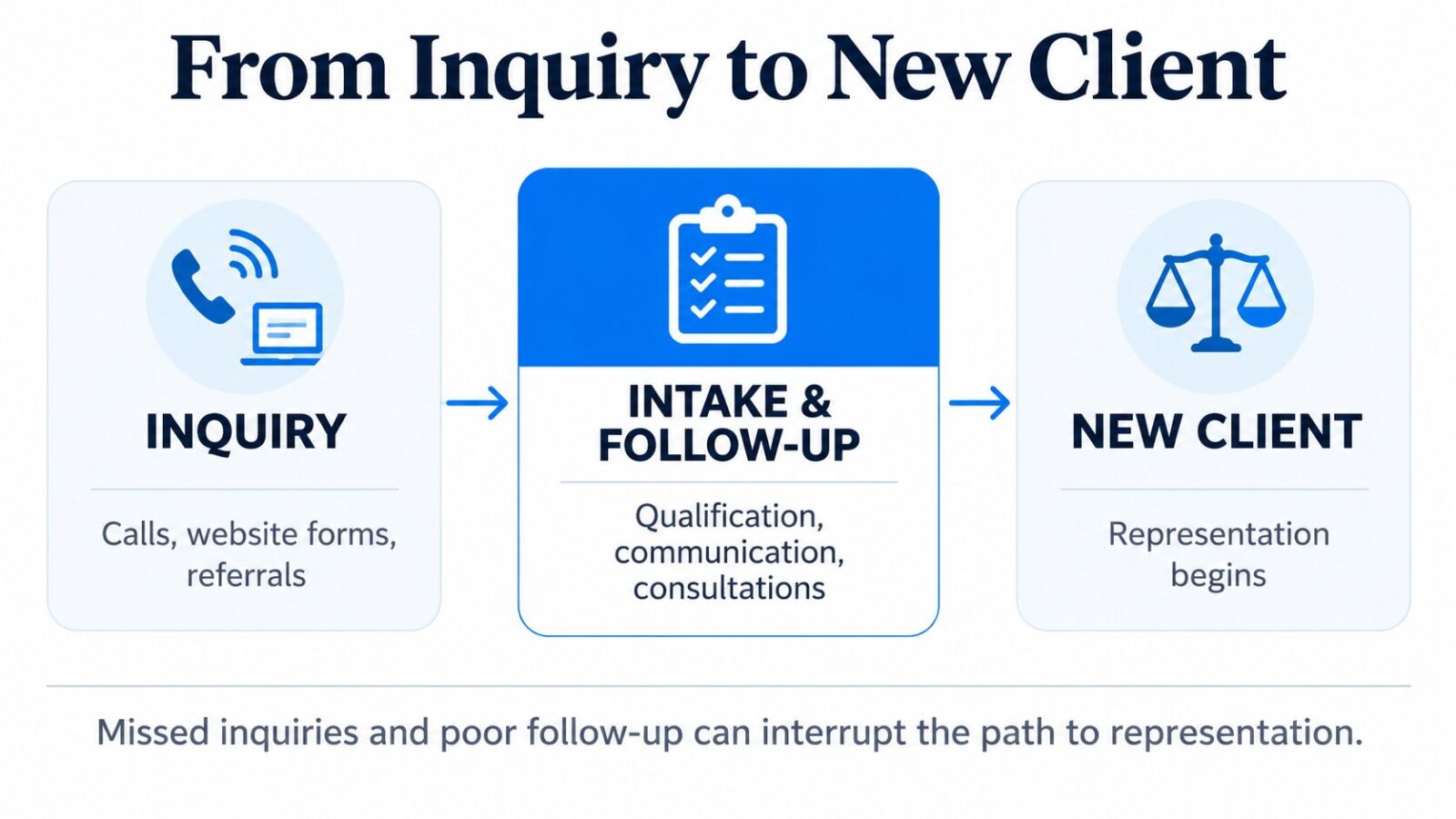
Communication & Follow-Up in Law Firm Intake
Improving intake doesn't necessarily mean hiring more staff or overhauling how a law firm operates. Often, it's a matter of establishing clear responsibilities, maintaining communication, and making it easier for prospective clients to move forward.
Timely Responses
Prospective clients may contact several firms, especially when facing urgent legal problems. A prompt response helps maintain their interest, even if it's simply an acknowledgment that someone received their inquiry and will follow up.
Clear Intake Responsibilities
Receptionists, intake specialists, paralegals, and attorneys may all participate in evaluating a potential case. Establishing who handles initial inquiries, reviews information, and coordinates next steps helps keep the process organized.
Consistent Follow-Up
Not every prospective client is ready to proceed immediately. A consistent follow-up process helps firms maintain contact with interested prospects, track outstanding decisions, and continue conversations without starting over each time.
Setting Lead Expectations
Clear communication about consultations, anticipated response times, and required information helps prospective clients understand the process. Even when a firm cannot accept a case, a professional response can leave a positive impression.
Technology That Supports Law Firm Intake & Lead Management
Digital tools can help law firms organize incoming inquiries, coordinate communication, and track prospective clients without relying on disconnected inboxes or manual reminders. Depending on the firm's needs, these solutions may involve existing software, custom integrations, or automated workflows.
Connected Forms & Lead Routing
Website forms can direct inquiries to the appropriate staff member, practice area, or office instead of a general inbox. Custom API integrations can also connect forms with intake platforms and other systems the firm already uses.
CRM & Lead Tracking Systems
Customer relationship management (CRM) and legal intake platforms help firms maintain records of prospective clients, including:
- Contact details and case information
- Lead sources and previous communications
- Consultation and follow-up history
- Inquiry status and assigned responsibilities
Automated Notifications & Follow-Ups
Software automation can trigger staff notifications, create follow-up tasks, update lead statuses, and flag inquiries that haven't been addressed. These workflows reduce manual tracking while keeping case evaluation and client communication in the firm's hands.
Marketing & Intake Reporting
Connecting marketing data with intake records helps firms understand which channels generate inquiries, consultations, and retained clients. That information provides a clearer foundation for evaluating marketing ROI than website conversions alone.
Firms should also consider confidentiality and data security when collecting information through intake systems. The ABA's Model Rule 1.18 addresses duties concerning information received from prospective clients, even when representation does not follow.
Connecting Law Firm Intake to Marketing Performance
Phone calls and form submissions show how many inquiries a law firm receives, but they don't reveal how many become worthwhile opportunities or retained clients. Tracking where those inquiries originate and what happens during intake provides a clearer picture of marketing performance.
| What to Track | What It Tells Your Firm |
|---|---|
| Incoming Inquiries | How many prospective clients contact the firm through phone calls, website forms, advertising, referrals, and other sources. |
| Qualified Leads | How many inquiries involve legal matters the firm handles and prospective clients it may be able to represent. |
| Consultations | How many prospective clients move beyond initial contact to a consultation or case evaluation. |
| Retained Clients | How many inquiries ultimately result in new clients, connecting lead generation and intake activity to actual business. |
| Lost Opportunities | Where promising inquiries go unanswered, stall during follow-up, or fail to advance despite appearing to be a good fit. |
A law firm generating plenty of qualified leads but few consultations may have an intake problem rather than a marketing problem. Improving conversion rates may deliver more value than increasing the marketing budget to attract additional inquiries.
Law Firm Intake & Lead Management FAQs
Q: Does my law firm need custom software to manage leads?
A: Not necessarily. Many firms can manage inquiries using existing legal intake platforms or CRM software. Custom development becomes more useful when a firm's workflows require capabilities existing platforms don't offer, or when disconnected systems create unnecessary administrative work. The decision should depend on what the firm needs, not simply whether custom software is available.
Q: What should my law firm do with inquiries for cases we don't handle?
A: Firms should have a process for identifying matters outside their practice areas, geographic reach, or capacity. Depending on the circumstances, they may decline the inquiry or refer the prospective client to another attorney. Clear communication matters: Prospective clients should understand whether the firm is considering representation, particularly when legal deadlines may apply. Any referral arrangements should comply with applicable professional conduct rules.
Q: Who owns the leads when my law firm works with a marketing agency?
A: That depends on the agreement and the systems involved. Firms should clarify who controls access to inquiry records, form submissions, call-tracking numbers, and related marketing data. They should also understand what happens to those assets if the agency relationship ends. Keeping access and ownership terms clear helps prevent disruptions to ongoing intake and follow-up.