
The best website design decisions come from understanding what happens inside your Little Rock, AR business every day. A site may touch marketing, sales, customer service, lead handling, internal systems, and several other parts of the operation.
Good design cannot cover up a website that is difficult to use or poorly connected to the rest of the business. Navigation, content, analytics, forms, and lead routing all need to work once the visitor starts clicking around.
Before choosing layouts, colors, or visual details, a Little Rock, AR website design company should know what success for the site actually looks like.
Table of contents
For more than 25 years, Hexxen has worked with Little Rock, AR businesses that sell to different audiences, rely on different systems, and have very different ideas about growth.
What Does a Business Website Need to Accomplish?
The right website experience changes with the business. Buyers evaluating a manufacturer may care about technical documents and specifications. People visiting a law firm may care far more about getting help quickly. Customers on an ecommerce site need a clear route from browsing to purchase. Your Little Rock, AR website should be built around those real-world differences.
Whatever the industry or audience, most business websites still need to accomplish four core things.
1. Explain the offer quickly.
A visitor should be able to land on the site and answer three questions without much effort: What does this company do? Is it for me? What should I do next?
2. Give people a reason to trust the business.
Visitors usually want some evidence before they take the next step. That could be examples of past work, reviews from customers, industry credentials, experienced people, detailed information, or content that demonstrates you know the subject.
3. Guide different users toward the right information.
A prospective customer should not have to navigate the website the same way as someone looking for support or applying for a job. Different visitors arrive with different goals, and the structure should account for that.
4. Create a useful next step.
Once someone has the information they need, the site should make the next move obvious. Depending on the business, that may mean calling, requesting a quote, buying a product, booking an appointment, logging into an account, downloading a resource, finding a dealer, applying, or contacting sales.
How Little Rock, AR Website Needs Change by Business Model
The fundamentals stay familiar, but the work changes depending on what the website is expected to sell, explain, organize, or connect.
Calls, forms, and appointments
Lead Generation Websites
For businesses that rely on inquiries, the website has to move people from research to action. Local search visibility, useful service pages, reviews, project examples, and straightforward contact options all help make that transition easier.
Products, carts, and repeat buyers
Ecommerce Websites
Ecommerce usability depends on the full purchase path, not just how products are presented. Search, filtering, stock information, payment, shipping, customer accounts, and post-purchase updates all need to work together.
Longer research and buying cycles
B2B and Industrial Websites
B2B and industrial buyers often spend a long time researching before they contact sales. Capabilities, technical information, industry experience, project examples, resources, and sales support all need to help answer questions along the way.
Multiple audiences and systems
Enterprise and Custom Platforms
Some websites are effectively part of the company’s infrastructure. When global content, APIs, data feeds, portals, permissions, custom workflows, and multiple stakeholder groups are involved, design becomes only one piece of a much larger project.

Little Rock, AR Website Design Services That Work Together
A website does not benefit from strong design if the content, development, SEO, strategy, and tracking are pulling in different directions. Hexxen coordinates those parts around what the completed site needs to do.
Website Strategy and Architecture
Before pages are designed, we work out what the website is supposed to do, who needs to use it, how information should be organized, and where important user paths should lead.
- Discovery, competitive review, and audience planning
- Sitemaps, page relationships, visitor journeys, and paths to conversion
- Content, feature, and integration requirements
UX, UI, and Visual Design
Good interface design gives information a clear hierarchy and makes actions easy to find. Navigation, typography, imagery, layouts, and interactive components are shaped around that goal, and mobile layouts are designed alongside desktop experiences.
- Structural wireframes and finished interface mockups
- Responsive page interfaces and reusable design components
- Accessible interfaces informed by established W3C accessibility guidance
Website Content and Search Foundations
The strongest website content answers the questions customers bring with them while clearly explaining what your Little Rock, AR business offers. Search terms help reveal those questions, while reviews, project examples, credentials, pricing, and other details help visitors make a decision.
- Core messaging, service content, product copy, and calls to action
- URLs, headings, metadata, schema, and site structure planned for search
- Information organized to support both traditional search and AI-driven discovery
Web Development and Integrations
Development is where the planned experience becomes functional. Hexxen builds the website, sets up content management, develops custom front-end features, and connects forms, ecommerce tools, APIs, and other business systems as needed.
- Custom website development and content management tools
- Integrations for CRM, ERP, payments, inventory, maps, portals, and APIs
- Secure forms, lead routing, user accounts, and custom functionality
Testing, Performance, and Launch
Launch preparation means testing the website as a working system. We check how it behaves across devices and browsers, make sure forms and integrations function correctly, and review analytics, redirects, accessibility, and search configuration.
- Device, browser, and responsive layout testing
- Page performance testing and improvements based in part on Google’s Core Web Vitals guidance
- Redirect mapping, indexing review, analytics verification, and launch assistance
SEO and Digital Marketing Integration
Marketing channels should not all dump visitors onto the same generic page. Hexxen plans websites to support SEO, paid campaigns, email, social media, content marketing, and other efforts with landing experiences suited to the campaign and audience.
- Service, location, resource, and landing pages built with SEO in mind
- Conversion routes, forms, CTAs, and lead tracking aligned with each campaign
- Analytics and attribution that connect website activity to marketing results
Little Rock, AR Website Design for Different Kinds of Growth
Good website design does not produce the same answer for every client. These projects needed four very different answers.
A global interface backed by complex data
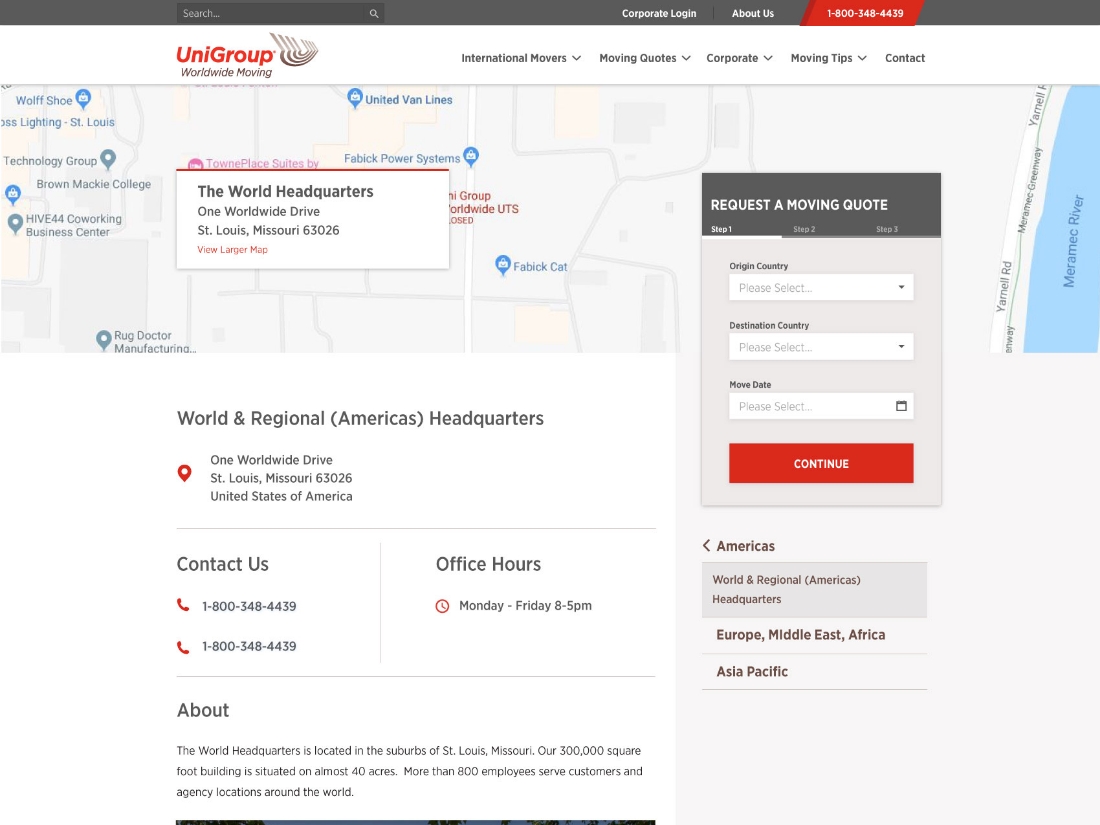
UniGroup Worldwide
UniGroup's website had fallen behind on both sides of the screen. Customers were not converting as well as they should, and the technology connecting the company's worldwide operations needed an overhaul.
Hexxen redesigned the customer experience and rebuilt the API infrastructure supporting it. The new system keeps information synchronized across UniGroup’s international network while presenting customers with a simpler, clearer path through the website.
Retail, ecommerce, and lead generation
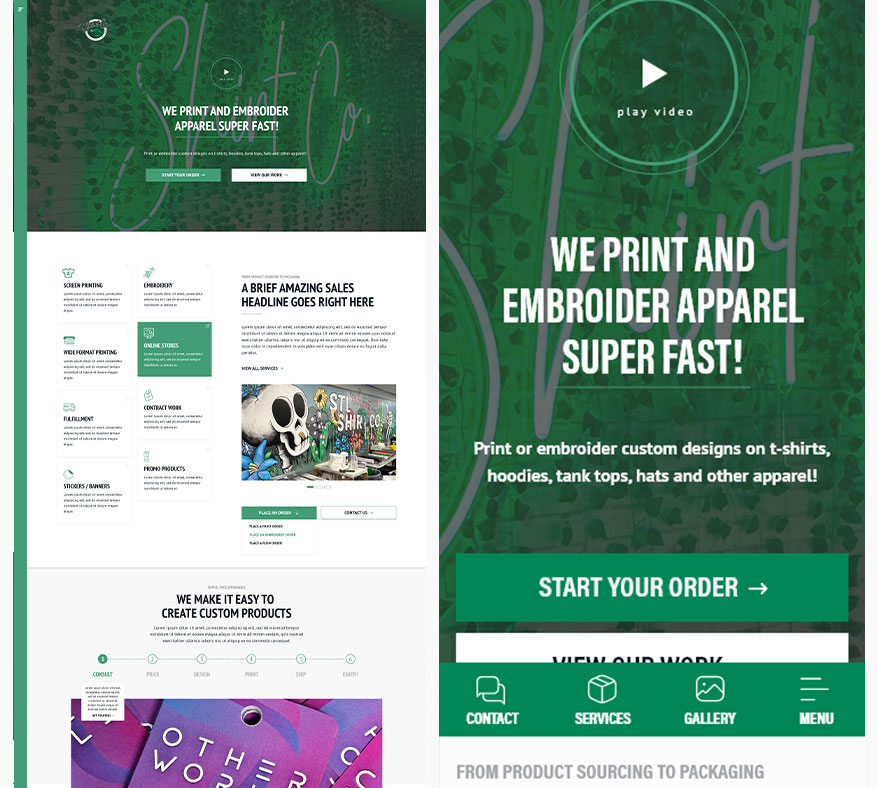
Shirt.Co
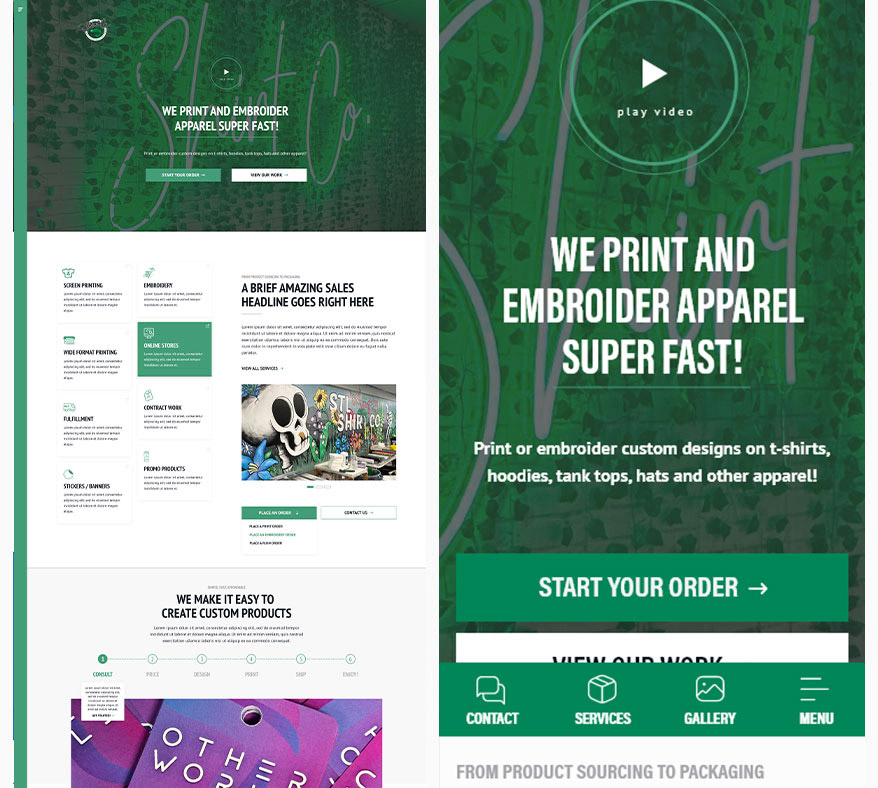
Shirt.Co serves customers looking for everything from custom apparel and promotional products to branded merchandise and online stores. With several production methods available as well, the website had to make it easy to understand the options and choose the right path.
The new website gave Shirt.Co's customers clearer routes through its products and services while sharpening the company's visual presentation. Hexxen paired those changes with SEO, paid media, and reporting, helping grow quote requests from roughly one or two each week to 15 to 20 each day.
Ready to Build the Website Your Little Rock, AR Business Needs Next?
Hexxen approaches the website as part of the larger business and marketing system, bringing strategy, content, design, development, SEO, and marketing together for your Little Rock, AR company.

What Happens After Your Website Launches?
Once the website launches, you finally get to see how real people use it. That data can shape future decisions while the site begins supporting marketing, sales, customer service, recruiting, ecommerce, and other parts of your Little Rock, AR business.
Can your team manage the website?
The site should not become dependent on one person who understands all of its quirks. Editors need a safe way to manage normal updates, backed by reliable support for changes that go beyond routine content.
How will the website support your marketing?
Marketing does not stand still after the website launches. SEO, advertising, email, social media, content, and offline campaigns may create new reasons to add landing pages, expand services, publish resources, test offers, or build different paths for different audiences.
Are important actions being measured?
The measurement plan should follow the actions your business actually cares about. That may include calls, form submissions, purchases, applications, or downloads, with Google Analytics conversion tracking supplying part of the data.
Is the site staying healthy?
Maintenance is mostly about preventing small technical problems from becoming business problems. Monitoring updates, security, availability, forms, integrations, performance, and links helps keep the site dependable.
What should improve next?
Your customers and sales team will keep showing you where the site can improve. Search patterns, user behavior, lead quality, and repeated questions can reveal pages that need more clarity, stronger evidence, or a simpler path forward.
Little Rock, AR Website Design Company FAQs
How much does a custom website cost?
A custom website is priced around what the project requires rather than a fixed page package. Content, design, functionality, integrations, ecommerce, migration, page types, and the condition of the current website all factor into the scope.
A clear proposal should connect the budget to the work. Page volume, custom functionality, integrations, content, and technical complexity can move a project into an entirely different category, which is why simple and complex sites should not be priced as though they are interchangeable.
How long does it take to design and build a website?
Most custom website timelines are measured in months, not days. A focused site can move faster. Content-heavy, ecommerce, multilingual, or highly integrated websites need more planning, production, review, development, and testing.
Client feedback, content approvals, photography, data cleanup, and third-party access can affect the schedule as much as the build itself.
Can Hexxen redesign an existing website?
Yes. A redesign can preserve the parts of the current site that still have value while replacing the parts that no longer serve the business. We review content, site structure, search performance, analytics, design, integrations, and technology as part of that process.
Can Hexxen write the website content?
Yes. We can develop the content plan and write the pages the website needs, including service and product copy, industry pages, location content, case studies, FAQs, supporting resources, and calls to action. The Little Rock, AR content team works alongside design throughout the project.
Is SEO included in website design?
SEO decisions start long before the website launches. Site structure, navigation, URLs, content planning, metadata, redirects, mobile layouts, speed, schema, and technical launch checks should all be considered during the project.
The initial project establishes the search foundation, but SEO continues as the market, competitors, search behavior, and website change. New content, technical improvements, authority building, local visibility, reporting, and ongoing optimization help the site continue developing after launch.
Will the website work on phones and tablets?
Yes. Responsive behavior is planned and tested across common screen sizes and browsers. Mobile design is not a compressed desktop page. Navigation, tap targets, content order, forms, media, and calls to action all need to work in the smaller space.
Can the website connect to our CRM, ERP, inventory, payment, or other systems?
Yes. Integrations can reduce manual work by connecting the website directly with systems such as CRMs, ERPs, inventory tools, ecommerce platforms, payment processors, portals, maps, forms, and custom software. The exact approach depends on available APIs, permissions, data, and platform restrictions.
Does Hexxen provide hosting, maintenance, and website support in Little Rock, AR?
Yes. Hexxen can continue supporting the website after launch with hosting, maintenance, security, performance work, content updates, development, analytics, SEO, and ongoing improvements.
Build a Website With a Clear Job for Your Little Rock, AR Business
Hexxen approaches website design from the business outward. That means understanding how your Little Rock, AR company attracts attention, communicates value, converts interest, and supports the next stage of growth.
The project can start wherever your Little Rock, AR business is today: an old website that needs replacing, a sitemap that has grown out of control, a new brand, a technical integration, or a concept that still needs direction. We help shape those pieces into a website customers can navigate and your team can rely on.