

The best website design decisions come from understanding what happens inside your Richmond, VA business every day. A site may touch marketing, sales, customer service, lead handling, internal systems, and several other parts of the operation.
The homepage may make the first impression, but the rest of the experience determines whether the site actually does its job. Confusing menus, thin content, missing data, and unreliable forms can undo even a strong visual design.
A Richmond, VA website design company should be able to explain what the site is supposed to do before spending much time deciding how it will look.
Table of contents
Hexxen has more than 25 years of experience helping Richmond, VA companies turn their websites into a better fit for their customers, internal systems, and plans for growth.
What Does a Business Website Need to Accomplish?
Start with what people are actually trying to accomplish when they reach your Richmond, VA website. For a manufacturer, that could mean putting detailed product information, drawings, and specifications within easy reach. For a law firm, it could mean helping someone with an urgent legal issue connect with an attorney immediately. For an ecommerce company, it often means shortening the distance between finding a product and completing the order.
The specifics change from one company to another. The basic job of the website usually comes down to four things.
1. Explain the offer quickly.
Someone unfamiliar with your company should not need several clicks and paragraphs of corporate language to understand the offer. Give them enough context to know whether they are in the right place and what to do from there.
2. Give people a reason to trust the business.
Trust can come from many places: completed projects, customer reviews, credentials, experienced staff, detailed product information, helpful resources, or simply a website that presents the company consistently. Which of those carries the most weight depends on the buyer.
3. Guide different users toward the right information.
One website can serve several audiences at once. The trick is making sure prospects, existing customers, applicants, purchasing teams, and other visitors can quickly separate onto the paths that make sense for them.
4. Create a useful next step.
Every important page should give the visitor somewhere useful to go from there. That could be checkout, a phone call, a form, an application, an appointment, a dealer locator, a download, an account portal, or a conversation with the sales team.
How Richmond, VA Website Needs Change by Business Model
Different business models put different demands on a website. Some sites need to generate leads, others need to process transactions, support long research cycles, or connect multiple systems and audiences.
Calls, forms, and appointments
Lead Generation Websites
Someone considering a Richmond, VA service business is usually trying to decide whether the company is credible, capable, and worth contacting. The site should support that decision with useful service content, local visibility, customer proof, and clear paths to call, submit a form, or book an appointment.
Products, carts, and repeat buyers
Ecommerce Websites
Online shoppers notice friction quickly. If products are hard to find, filters are unhelpful, checkout feels cumbersome, or order information is unclear, a polished product page will not save the experience.
Longer research and buying cycles
B2B and Industrial Websites
Capabilities, technical details, industries, project experience, resources, and sales support need to work together. Buyers may arrive with very specific questions long before they request a quote.
Multiple audiences and systems
Enterprise and Custom Platforms
Once a website has to serve multiple teams, regions, systems, and user types, the project becomes much broader than page design. Content governance, data feeds, APIs, permissions, portals, forms, and internal workflows all have to be considered together.

Richmond, VA Website Design Services That Work Together
Hexxen approaches strategy, content, design, development, SEO, and tracking as connected parts of one website project. Not every site needs the same scope, but the pieces that are included should work together.
Website Strategy and Architecture
Before pages are designed, we work out what the website is supposed to do, who needs to use it, how information should be organized, and where important user paths should lead.
- Business discovery, competitor research, and audience definition
- Sitemaps, page types, user journeys, and conversion paths
- Required content, website features, and system integrations
UX, UI, and Visual Design
Visual design should help people use the website, not compete with what they came to do. Layouts, navigation, typography, imagery, and interactive elements are built around the content and user journey, while mobile layouts are considered from the start.
- Wireframes and high-fidelity page mockups
- Responsive interfaces with consistent, reusable design patterns
- Accessibility-conscious design guided by W3C accessibility guidance
Website Content and Search Foundations
A page should not exist simply because a keyword exists. We plan content around search demand, customer questions, and the information your Richmond, VA business needs to communicate, then strengthen those pages with relevant proof such as reviews, examples, credentials, or pricing information.
- Core messaging, service content, product copy, and calls to action
- URLs, headings, metadata, schema, and site structure planned for search
- Content architecture built for conventional search and AI-assisted results
Web Development and Integrations
Development is where the planned experience becomes functional. Hexxen builds the website, sets up content management, develops custom front-end features, and connects forms, ecommerce tools, APIs, and other business systems as needed.
- Custom-built functionality and manageable content systems
- Connections to CRM, ERP, payment, inventory, mapping, portal, and API systems
- Secure forms, user accounts, lead routing, and custom-built functionality
Testing, Performance, and Launch
Before visitors reach the new site, we verify that the things behind the design work as expected. Browsers, devices, forms, redirects, analytics, accessibility, search settings, and connected systems all get checked as part of launch preparation.
- Testing across browsers, devices, and screen sizes
- Website performance work guided by Google’s Core Web Vitals guidance
- Launch support covering redirects, indexing, and analytics
SEO and Digital Marketing Integration
Marketing channels should not all dump visitors onto the same generic page. Hexxen plans websites to support SEO, paid campaigns, email, social media, content marketing, and other efforts with landing experiences suited to the campaign and audience.
- Search-ready service pages, geographic pages, resources, and campaign landing pages
- Campaign-specific conversion paths, forms, calls to action, and lead tracking
- Analytics and attribution built to show how website activity contributes to marketing outcomes
Richmond, VA Website Design for Different Kinds of Growth
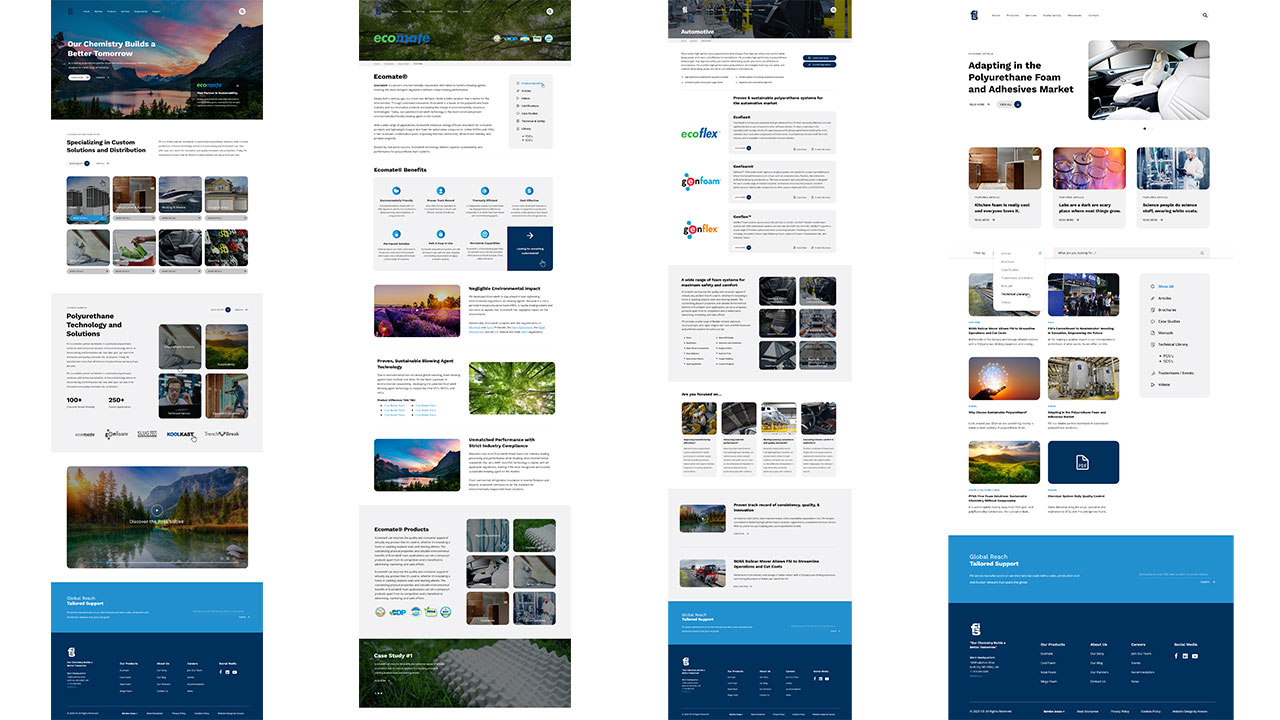
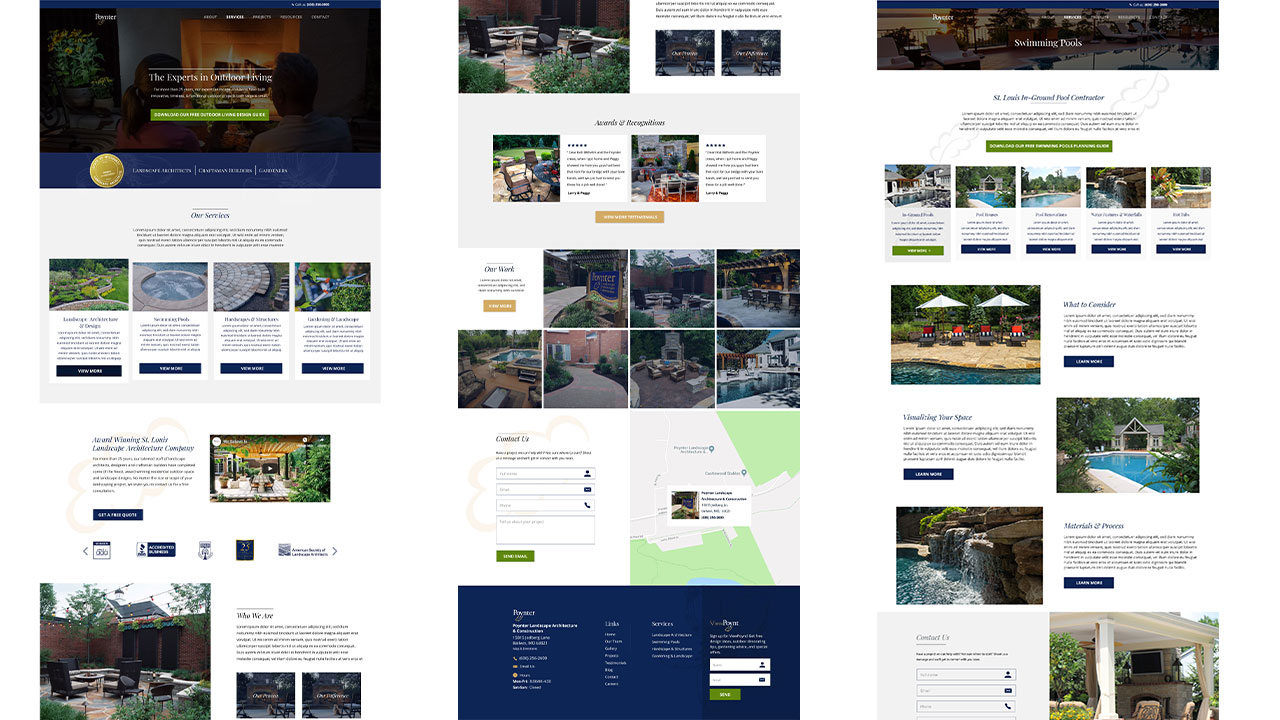
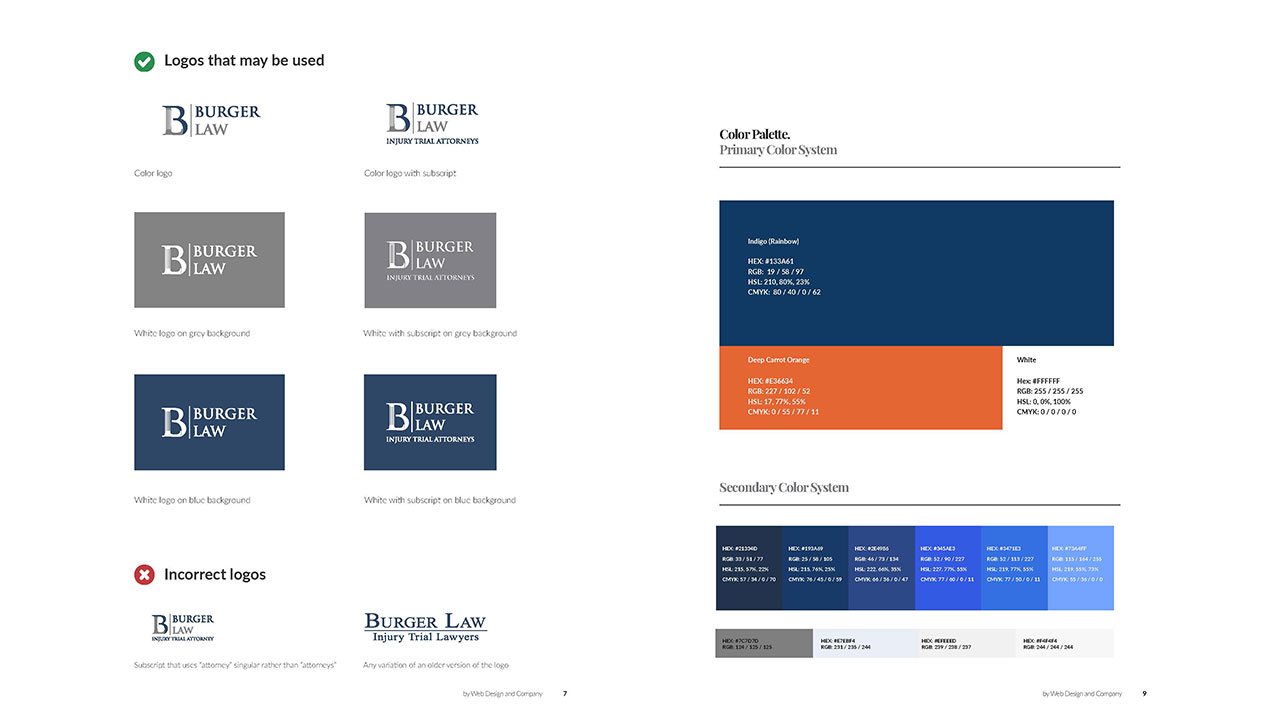
A website should reflect what the business is trying to accomplish, which means the solution can look very different from one project to another. These four examples make that clear.
A multi-market growth and intake platform
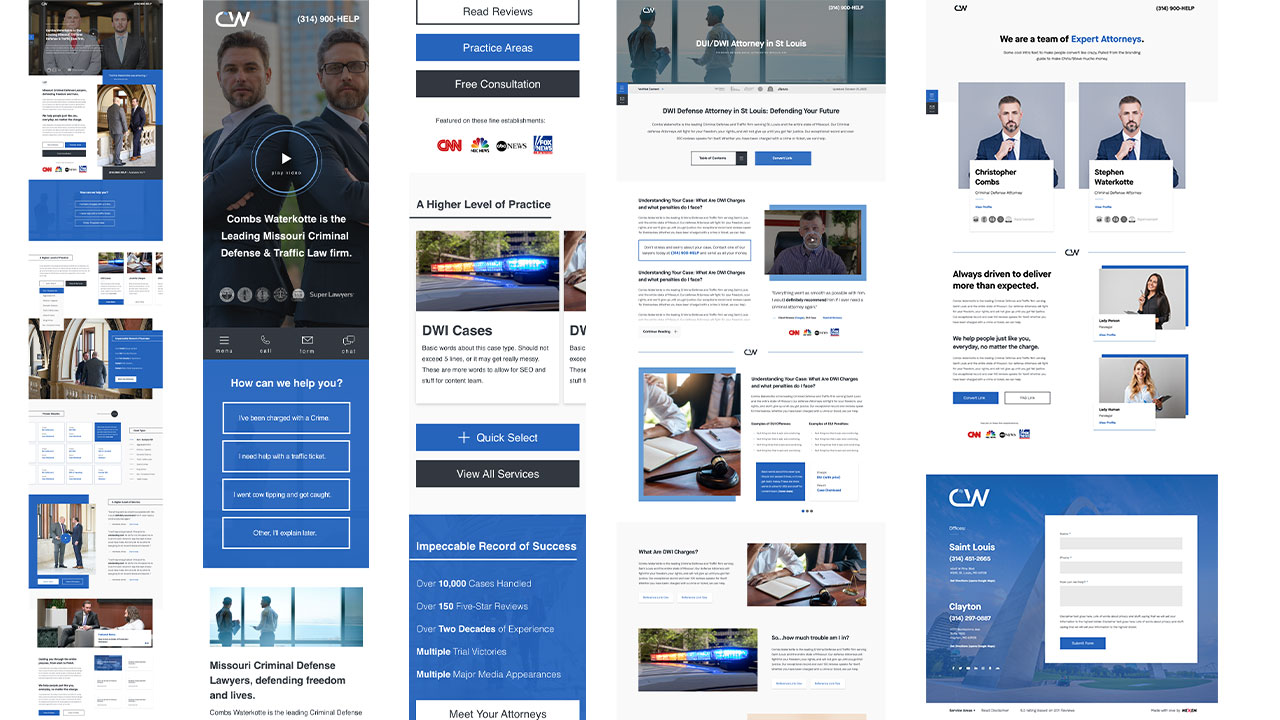
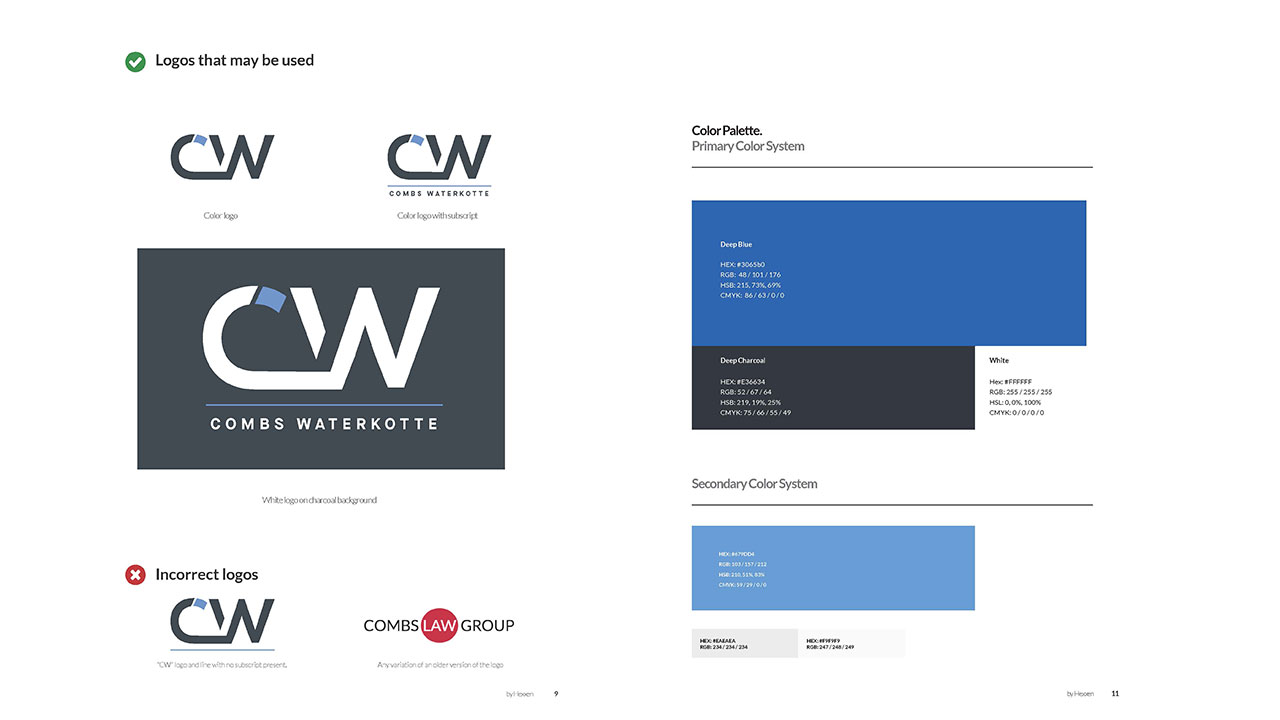
Combs Waterkotte
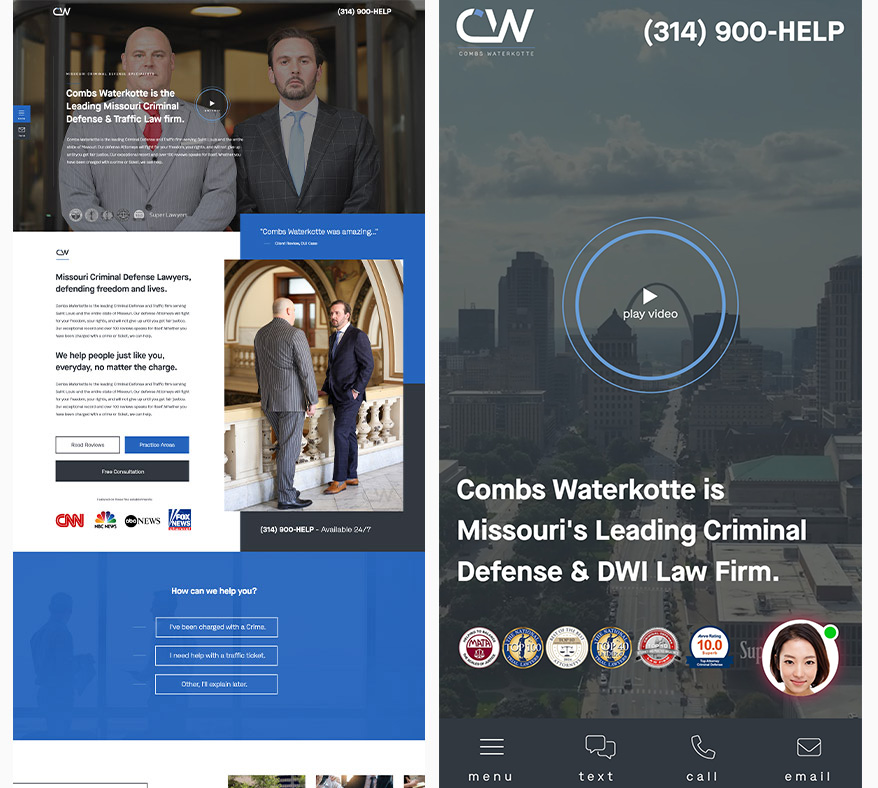
Combs Waterkotte’s website had to keep pace as the firm added attorneys, practice areas, offices, and entirely new markets.
The website became a platform for expansion rather than a static brochure. Hexxen created location-based navigation, case-specific content, dedicated landing pages, and more advanced intake tools, while also supporting the firm through search, advertising, branding, and operations work. Over eight years, Combs Waterkotte expanded to six locations and reported 700% revenue growth.
A searchable portfolio and sales tool
Counsilman-Hunsaker
Counsilman-Hunsaker had decades of work and more than 1,500 aquatic projects to present. The challenge was making that depth of experience easy for prospective clients to search instead of forcing them through an enormous portfolio.
Hexxen turned the portfolio into a searchable tool. Visitors and the sales team can narrow projects by type, sector, service, or location, while an interactive map gives them another way to explore the company’s decades of work.

Ready to Build the Website Your Richmond, VA Business Needs Next?
From the first planning decisions through development, search, and marketing, Hexxen builds around what your Richmond, VA business actually needs the website to do.
Connecting Your Website to Marketing and Operations in Richmond, VA
The website may be what customers see, but much of its value depends on what happens after someone clicks, submits, buys, or books. Marketing and internal operations need to meet somewhere, and the website often becomes that bridge.
- Do not make your team sort every website inquiry manually.
A form can use the information someone submits to send the inquiry to the right team based on location, service, product, urgency, office, or customer type. - Send campaign traffic somewhere that matches why the visitor clicked.
SEO, paid search, email, social, media, and sales outreach perform better when the landing experience continues the message that earned the click. - The customer experience should stay intact as systems change behind it.
Your business may use several different platforms behind the website, but customers should not have to repeatedly enter the same information or figure out where one system ends and another begins. - Reporting should follow actions with business value.
Pageviews and sessions help explain what people did on the site. Conversion and revenue data help explain what that activity was worth to the business.
Richmond, VA Website Design Company FAQs
How much does a custom website cost?
A custom website is priced around what the project requires rather than a fixed page package. Content, design, functionality, integrations, ecommerce, migration, page types, and the condition of the current website all factor into the scope.
Website pricing makes more sense when the scope is visible. The proposal should identify what is included, what is optional, and which features or requirements could materially change the cost.
How long does it take to design and build a website?
Most custom website timelines are measured in months, not days. A focused site can move faster. Content-heavy, ecommerce, multilingual, or highly integrated websites need more planning, production, review, development, and testing.
A website can be technically on schedule and still get held up waiting for approved copy, photographs, cleaned-up data, stakeholder feedback, or credentials for third-party platforms.
Can Hexxen redesign an existing website?
Yes. A redesign can preserve the parts of the current site that still have value while replacing the parts that no longer serve the business. We review content, site structure, search performance, analytics, design, integrations, and technology as part of that process.
Can Hexxen write the website content?
Yes. Website content can be part of the project rather than something your team has to finish after the designs are approved. Hexxen can plan and write core messaging, product or service pages, location and industry content, case studies, FAQs, resources, and calls to action.
Is SEO included in website design?
Yes, the website should be planned with search in mind from the beginning. Navigation, architecture, URLs, content, metadata, redirects, mobile usability, performance, schema, and launch settings can all affect how well search engines understand and access the site.
The initial project establishes the search foundation, but SEO continues as the market, competitors, search behavior, and website change. New content, technical improvements, authority building, local visibility, reporting, and ongoing optimization help the site continue developing after launch.
Will the website work on phones and tablets?
Yes. Mobile users should get a website designed for the device in their hands, not a miniature desktop page. We plan and test responsive layouts across common screen sizes and browsers, including navigation, forms, media, content flow, and calls to action.
Can the website connect to our CRM, ERP, inventory, payment, or other systems?
Yes. Websites can exchange information with many of the systems your team already uses. Hexxen builds integrations for CRM and ERP platforms, ecommerce, payments, inventory, maps, portals, forms, and custom applications, subject to the API access and technical limitations of those platforms.
Does Hexxen provide hosting, maintenance, and website support in Richmond, VA?
Yes. Hexxen provides post-launch support for both the day-to-day health of the website and its continued development, including hosting, maintenance, security, performance, content updates, development work, analytics, and SEO.
Build a Website With a Clear Job for Your Richmond, VA Business
Hexxen builds websites around how your Richmond, VA business really works, from bringing in new customers and communicating what sets you apart to managing leads and supporting growth.
You do not need to arrive with every detail figured out. Bring the old site, the unfinished plan, the new branding, the technical headache, or the rough idea, and we can work out how to turn it into something useful for both your visitors and your Richmond, VA team.