
Successful website design needs to support the way your Seattle, WA business actually works. That includes everything from marketing and sales to customer service and the systems your team uses behind the scenes.
A sharp-looking site is only useful if the machinery underneath it works. If visitors get lost, analytics miss important activity, content leaves questions unanswered, or leads disappear after submitting a form, the design has not solved the real problem.
The first questions a Seattle, WA website design company asks should be about the business, the audience, and what visitors need to do on the site. The visual direction should come after those goals are clear.
Table of contents
Hexxen has more than 25 years of experience helping Seattle, WA companies turn their websites into a better fit for their customers, internal systems, and plans for growth.
What Does a Business Website Need to Accomplish?
The right website experience changes with the business. Buyers evaluating a manufacturer may care about technical documents and specifications. People visiting a law firm may care far more about getting help quickly. Customers on an ecommerce site need a clear route from browsing to purchase. Your Seattle, WA website should be built around those real-world differences.
Even with those differences, most effective websites have four things they need to get right.
1. Explain the offer quickly.
Visitors should be able to quickly understand what you do, whether it is relevant to them, and where they should go next, without having to dig through vague messaging or unnecessary content.
2. Give people a reason to trust the business.
Do not make visitors take your claims on faith. Show them the work, the people, the qualifications, the customer feedback, the product details, or whatever else helps them decide whether your business is credible.
3. Guide different users toward the right information.
A prospective customer should not have to navigate the website the same way as someone looking for support or applying for a job. Different visitors arrive with different goals, and the structure should account for that.
4. Create a useful next step.
The right call to action depends on where the visitor is and what they are ready to do. A product page may lead to a purchase, a service page to a quote or call, and a customer page to an account login or support option. Whatever the action is, it should be straightforward to complete.
How Seattle, WA Website Needs Change by Business Model
The fundamentals stay familiar, but the work changes depending on what the website is expected to sell, explain, organize, or connect.
Calls, forms, and appointments
Lead Generation Websites
For businesses that rely on inquiries, the website has to move people from research to action. Local search visibility, useful service pages, reviews, project examples, and straightforward contact options all help make that transition easier.
Products, carts, and repeat buyers
Ecommerce Websites
Ecommerce usability depends on the full purchase path, not just how products are presented. Search, filtering, stock information, payment, shipping, customer accounts, and post-purchase updates all need to work together.
Longer research and buying cycles
B2B and Industrial Websites
The sales cycle on a B2B website may stretch across multiple visits and multiple people. The site should make it easy to verify technical fit, understand capabilities, review relevant experience, and find additional information before anyone is ready to request pricing.
Multiple audiences and systems
Enterprise and Custom Platforms
At enterprise scale, the website may function as a shared layer between customers, employees, internal systems, and outside platforms. Integrations, permissions, data, global content, custom forms, and stakeholder requirements can all shape how the site has to be built.

Seattle, WA Website Design Services That Work Together
Building the website is only one part of the job. Hexxen coordinates strategy, content, design, development, SEO, and tracking so the finished site functions as one system rather than a collection of disconnected deliverables.
Website Strategy and Architecture
Strategy starts with the questions that shape the rest of the project: Who is coming to the site? What are they looking for? How should the navigation be organized? Which pages help them find information and take action?
- Discovery, competitive review, and audience planning
- Page architecture, user flows, sitemaps, and conversion planning
- Planning for content, functionality, and connected systems
UX, UI, and Visual Design
Good interface design gives information a clear hierarchy and makes actions easy to find. Navigation, typography, imagery, layouts, and interactive components are shaped around that goal, and mobile layouts are designed alongside desktop experiences.
- Wireframes and high-fidelity page mockups
- Responsive page interfaces and reusable design components
- Accessible interfaces informed by established W3C accessibility guidance
Website Content and Search Foundations
Search visibility and useful content usually overlap when the page is built around what people actually want to know. We identify those searches, connect them to what your Seattle, WA business offers, and include the supporting information visitors need to evaluate the company.
- Core website messaging, service or product content, and next-step calls to action
- URLs, headings, metadata, schema, and site structure planned for search
- Content organized for traditional search and AI-assisted discovery
Web Development and Integrations
After design approval, Hexxen turns the layouts into a working website and connects the systems required to support it. Depending on the project, that may involve custom front-end work, content management, ecommerce functionality, APIs, forms, or integrations with other platforms.
- Custom website development and content management tools
- Integrations for CRM, ERP, payments, inventory, maps, portals, and APIs
- Secure forms, lead routing, user accounts, and custom functionality
Testing, Performance, and Launch
Before the site is released, we work through the pieces that are easy to miss in a mockup. That includes browser and device testing, form submissions, redirects, tracking, accessibility checks, search settings, and connections to outside systems.
- Testing across browsers, devices, and screen sizes
- Website performance work guided by Google’s Core Web Vitals guidance
- Redirects, search indexing checks, analytics setup, and launch support
SEO and Digital Marketing Integration
Marketing channels should not all dump visitors onto the same generic page. Hexxen plans websites to support SEO, paid campaigns, email, social media, content marketing, and other efforts with landing experiences suited to the campaign and audience.
- SEO-conscious service content, location pages, resources, and landing pages
- Conversion routes, forms, CTAs, and lead tracking aligned with each campaign
- Tracking that connects on-site behavior with campaign and marketing results
Seattle, WA Website Design for Different Kinds of Growth
There is no single website formula that works for every growing business. The four projects below called for different priorities, features, and solutions.
A searchable portfolio and sales tool
Counsilman-Hunsaker
Counsilman-Hunsaker needed to showcase more than 1,500 aquatic projects that allow prospective clients to quickly find relevant examples of its work.
The finished site allows users to search Counsilman-Hunsaker’s work by the criteria that actually matter to a buyer, including project type, industry sector, service, and location. Hexxen also added an interactive map so the company’s long project history could support real sales conversations instead of simply sitting in a portfolio.

A global interface backed by complex data
UniGroup Worldwide
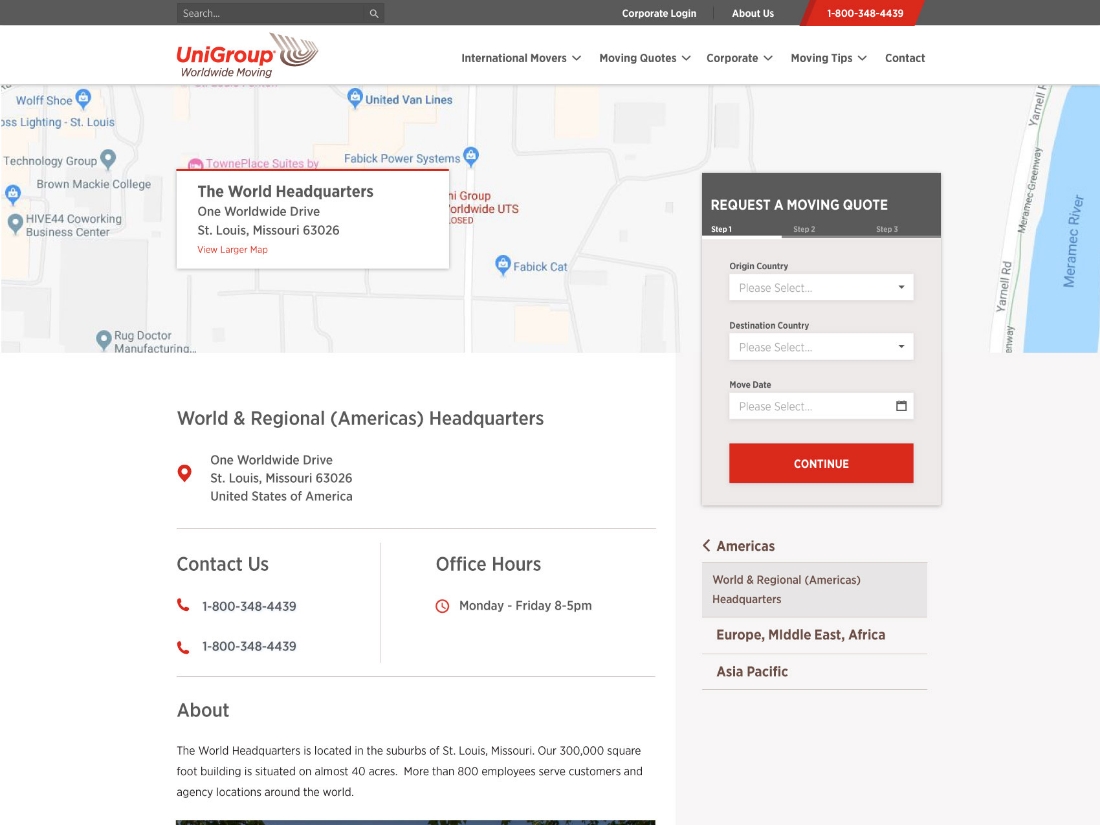
The problems with UniGroup's website went deeper than design. Conversion performance was weak, and the systems supporting its global network were overdue for modernization.
Hexxen simplified what customers see without oversimplifying what the business needs. A redesigned interface improves the path to conversion, while modern API connections manage the data moving throughout UniGroup’s worldwide network.
Retail, ecommerce, and lead generation
Shirt.Co
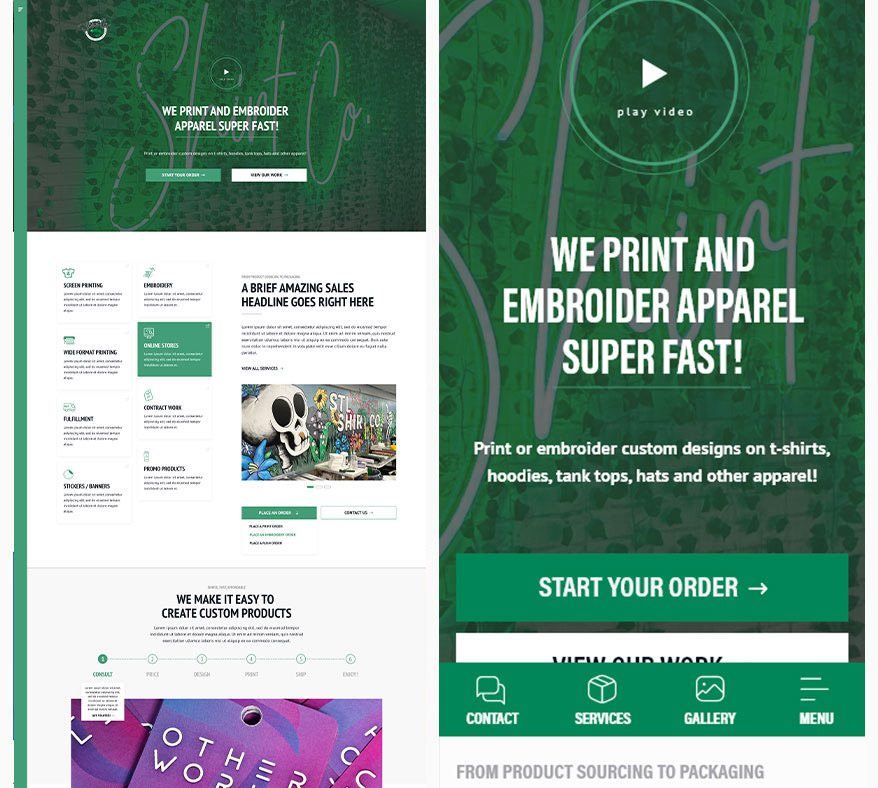
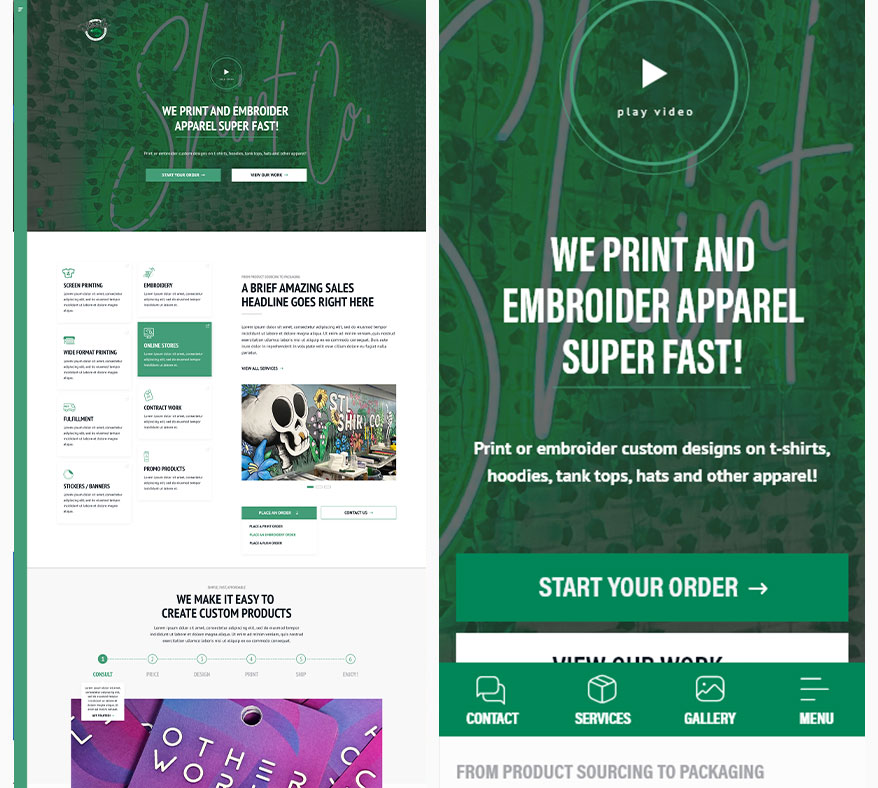
Shirt.Co serves customers looking for everything from custom apparel and promotional products to branded merchandise and online stores. With several production methods available as well, the website had to make it easy to understand the options and choose the right path.
Hexxen simplified the way services were presented, gave the brand a stronger visual identity, and made products and quote requests easier to reach. Supported by SEO, paid campaigns, and reporting, the broader strategy helped move quote volume from about one or two per week to 15 to 20 per day.
A multi-market growth and intake platform
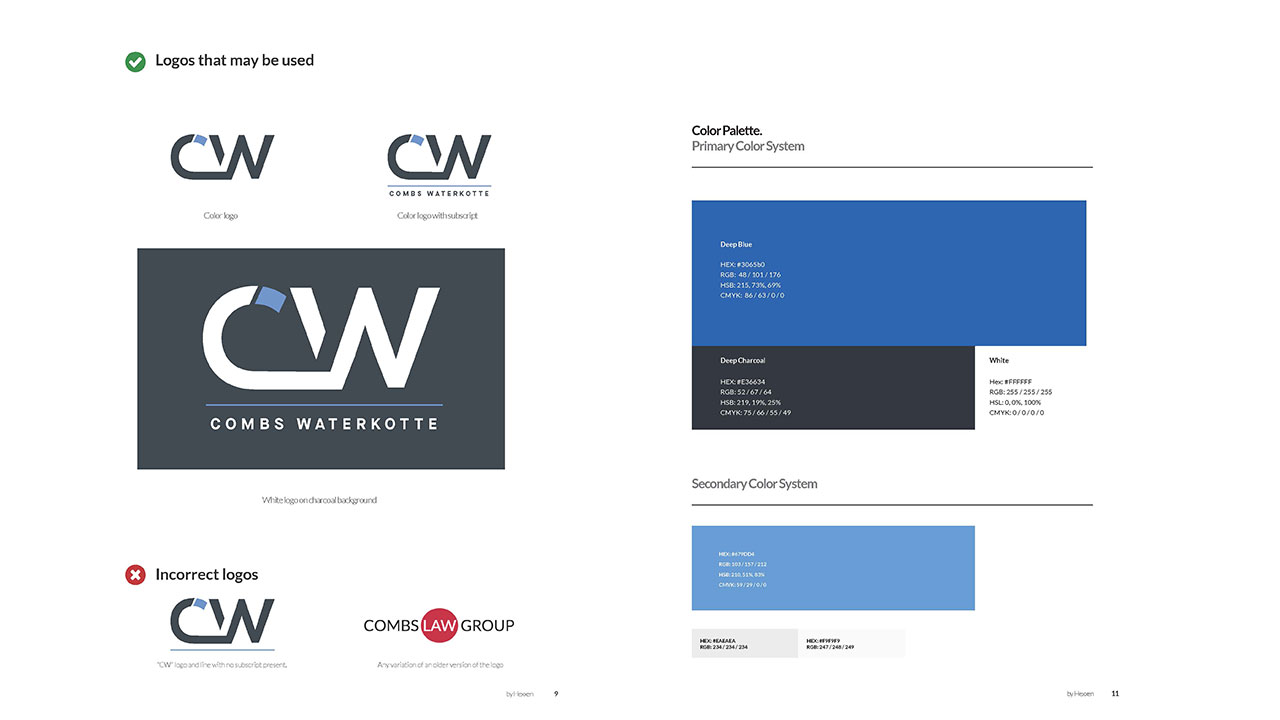
Combs Waterkotte
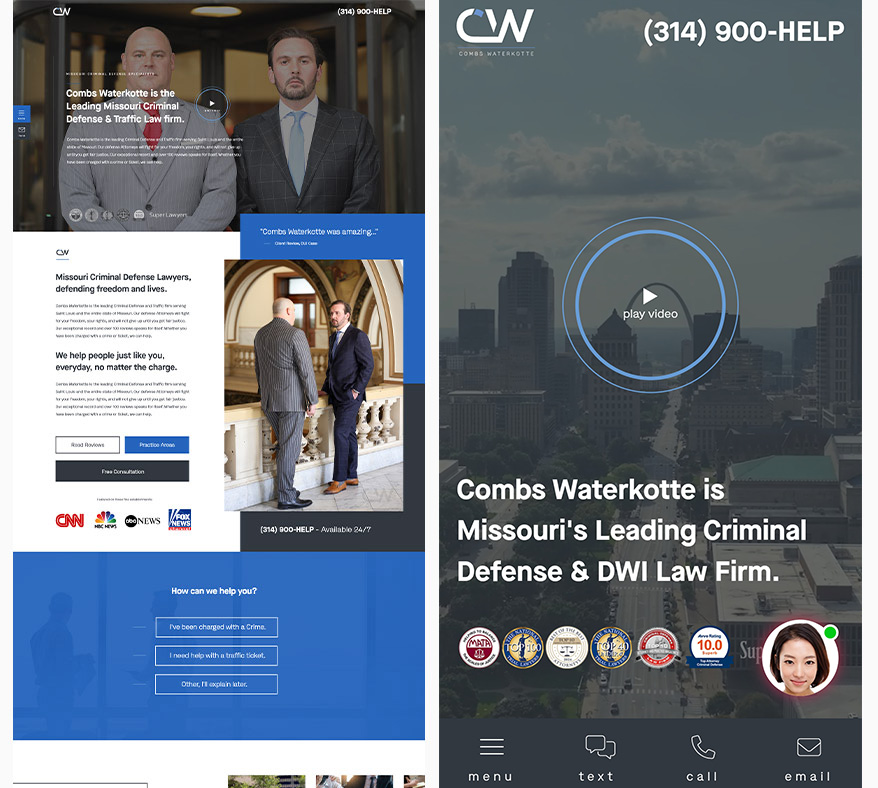
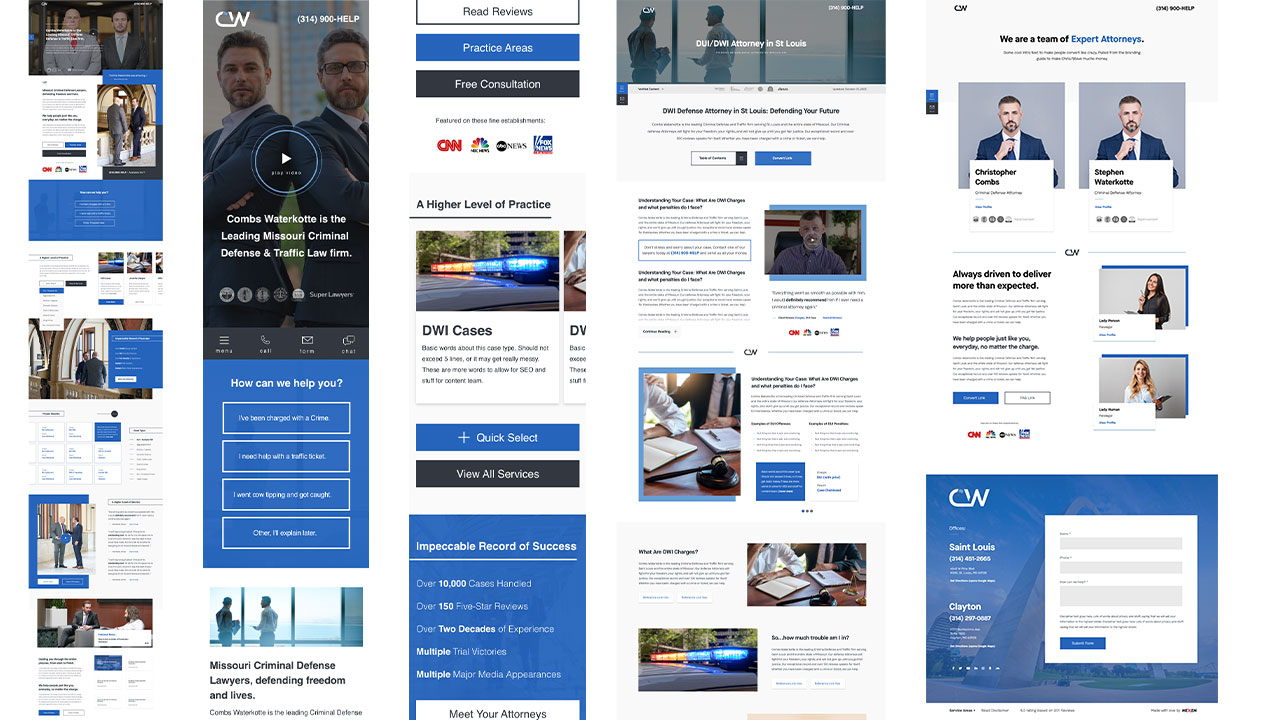
Combs Waterkotte’s website had to keep pace as the firm added attorneys, practice areas, offices, and entirely new markets.
The new site was structured around how prospective clients actually look for legal help, with location-based navigation, case-specific content, dedicated landing pages, and intake forms designed to capture the right information. Alongside Hexxen’s work in search, advertising, branding, and operations, Combs Waterkotte expanded to six offices and reported revenue growth of 700% across eight years.
Ready to Build the Website Your Seattle, WA Business Needs Next?
Hexxen brings strategy, content, design, development, SEO, and marketing together around what the website needs to accomplish for your Seattle, WA business.

Common Problems With Seattle, WA Business Websites
A website usually does not underperform because of one dramatic failure. More often, several smaller issues pile up: unclear messaging, confusing navigation, weak content, sluggish pages, poor mobile layouts, or forms that have gone unchecked for months.
The website still represents an older version of your Seattle, WA company.
Growth often exposes the age of a website. The company may have added locations, services, staff, or entirely new markets, while visitors are still navigating a site designed for the business as it existed years ago.
People visit, but they do not take the next step.
The analytics may show plenty of activity without producing many real opportunities. That often means visitors are not getting the answers, confidence, or next step they need to move from browsing to contacting or buying.
The navigation makes sense internally, not to customers.
The navigation is organized around the company instead of the customer. Services, product categories, industries, and locations may make sense internally, but visitors can struggle to figure out where the information they need actually lives.
Content, design, and development were planned separately.
If each discipline starts working before the others are ready, problems get pushed downstream. Content has to bend around the design, development gets revised repeatedly, and the finished website feels pieced together instead of intentionally built.
The website creates work behind the scenes.
Some of the most expensive website problems happen after the visitor clicks submit. Staff may be moving data by hand, correcting lead routing, updating the same information in multiple systems, or trying to figure out where a customer originally came from.
Seattle, WA Website Design Company FAQs
How much does a custom website cost?
The price depends on what actually has to be planned, written, designed, built, connected, and migrated. The size of the site, complexity of the design, content requirements, custom features, ecommerce needs, integrations, and existing technology all play a role.
A useful proposal should show what is included and which parts of the project create the largest swings in cost. A five-page marketing site and a multi-location platform with custom APIs are not neighboring products.
How long does it take to design and build a website?
Most substantial website projects are not week-long builds. Strategy, content, design, development, integrations, review, and testing take time, especially when the site includes ecommerce, multiple languages, large amounts of content, or complex functionality.
A website can be technically on schedule and still get held up waiting for approved copy, photographs, cleaned-up data, stakeholder feedback, or credentials for third-party platforms.
Can Hexxen redesign an existing website?
Yes. A redesign starts with understanding what the existing website is already doing well and where it is creating problems. Hexxen can review the architecture, content, visuals, SEO performance, analytics, integrations, and technology before deciding what carries forward.
Can Hexxen write the website content?
Yes. Hexxen's Seattle, WA content team can handle website messaging from the core company pages through services, products, industries, locations, case studies, FAQs, resources, and calls to action. Writers and designers work together so the layout reflects the content instead of forcing the copy into a finished template later.
Is SEO included in website design?
A redesign can create search problems if SEO is saved for the end. Hexxen considers crawlability, page structure, URLs, metadata, content, redirects, mobile experience, performance, schema, and other search requirements throughout the build.
The website should launch ready to support search instead of creating a list of SEO repairs immediately afterward. From there, ongoing SEO can expand content, strengthen authority and local visibility, address new technical opportunities, measure performance, and keep improving the site.
Will the website work on phones and tablets?
Yes. The interface adjusts for different devices and is tested across typical browser and screen combinations. Particular attention goes to the things that often become awkward on mobile, such as menus, forms, buttons, media, content order, and calls to action.
Can the website connect to our CRM, ERP, inventory, payment, or other systems?
Yes. Websites can exchange information with many of the systems your team already uses. Hexxen builds integrations for CRM and ERP platforms, ecommerce, payments, inventory, maps, portals, forms, and custom applications, subject to the API access and technical limitations of those platforms.
Does Hexxen provide hosting, maintenance, and website support in Seattle, WA?
Yes. Hexxen can support hosting, maintenance, security, performance, content changes, development updates, analytics, SEO, and continued improvement after launch.
Build a Website With a Clear Job for Your Seattle, WA Business
Hexxen creates websites that reflect the way your Seattle, WA company operates in the real world, including how it reaches customers, explains what it offers, manages inquiries, and grows over time.
Whether you are starting with an outdated website, a tangled sitemap, a new brand, a difficult integration, or an idea that still needs structure, Hexxen can help turn it into a website that makes sense to customers and works for your Seattle, WA business.