

Making Law Firm Marketing Work
Book Conclusion: Putting the Pieces Together
Table of contents
Law firm marketing doesn't end when someone finds your website, clicks an ad, or calls your office. The work you've put into building visibility matters because of what happens next: whether prospective clients find the information they need, choose to contact your firm, and ultimately become the kinds of cases you want to take on.
Throughout this guide, we've explored the different ways law firms can attract business online and the decisions that influence their results. Putting those pieces together means building a marketing program around your firm's priorities, not simply doing more marketing. The right approach connects what you're investing with the clients you're reaching and the business you're trying to build.
What We've Covered & Why It Matters for Law Firms
| Part | Key Takeaway |
|---|---|
| 1: SEO for Law Firms | Search visibility comes from building a useful, well-organized website around the services your firm provides. Rankings matter, but attracting relevant prospective clients matters more than appearing for every possible keyword. |
| 2: Paid Advertising | Paid campaigns provide opportunities to reach prospective clients without waiting for organic rankings to improve. Their value depends on reaching the right audience, managing costs, and converting paid inquiries into worthwhile business. |
| 3: Local Search | Where a firm operates and where prospective clients search can substantially affect visibility. Accurate business information, local relevance, and reputation help connect the firm with people seeking legal representation in its markets. |
| 4: Lead Generation | Traffic and inquiries only become meaningful business results when firms can convert prospective clients into retained matters. Intake processes and financial measurement help determine whether the marketing investment is actually worthwhile. |
What Does Your Firm Actually Want From Marketing?
More leads aren't always the answer. The value of a marketing program depends on the business your firm wants to build. That might mean attracting different cases, expanding services, or making existing investments more profitable.
Attract More of the Right Cases
More inquiries won't necessarily produce better business. A firm looking to attract particular case types can use keyword research and search intent targeting to reach prospective clients seeking the services it wants to provide.
Develop a Practice Area
Growing a particular service may require dedicated website content and advertising that introduces the firm's capabilities to new audiences. Success might mean more retained matters in that practice area, even if overall traffic remains steady.
Build a More Predictable Source of Business
Referrals can bring valuable clients, but their timing and volume aren't always predictable. Organic search and paid advertising offer additional ways to attract qualified inquiries without depending entirely on professional relationships or word of mouth.
Improve Profitability From Existing Marketing
A busy firm may benefit more from reducing acquisition costs or improving conversions than generating additional leads. Tracking marketing ROI helps identify which investments produce worthwhile business and where spending could be adjusted.
What Should Law Firms Expect From Their Marketing?
Law firm marketing requires ongoing investment, realistic expectations, and a willingness to adjust. Even a well-planned strategy won't produce identical results across every practice area or geographic market. Competition affects costs, and different marketing efforts take different amounts of time to generate business.
Law firms should expect several realities when investing in marketing:
- Different timelines: Paid advertising can generate visibility shortly after launch, while SEO and content investments often need more time to develop.
- Ongoing maintenance: Websites need updates, campaigns require adjustments, and legal content can become outdated.
- Uneven performance: Rankings fluctuate and inquiry volume changes. Firms should evaluate meaningful trends rather than react to every disappointing month.
Marketing providers should be able to explain what they're doing, what the investment is intended to accomplish, and how they'll evaluate progress. Realistic expectations don't mean accepting poor performance. They mean having a reasonable basis for recognizing progress and deciding when something needs to change.
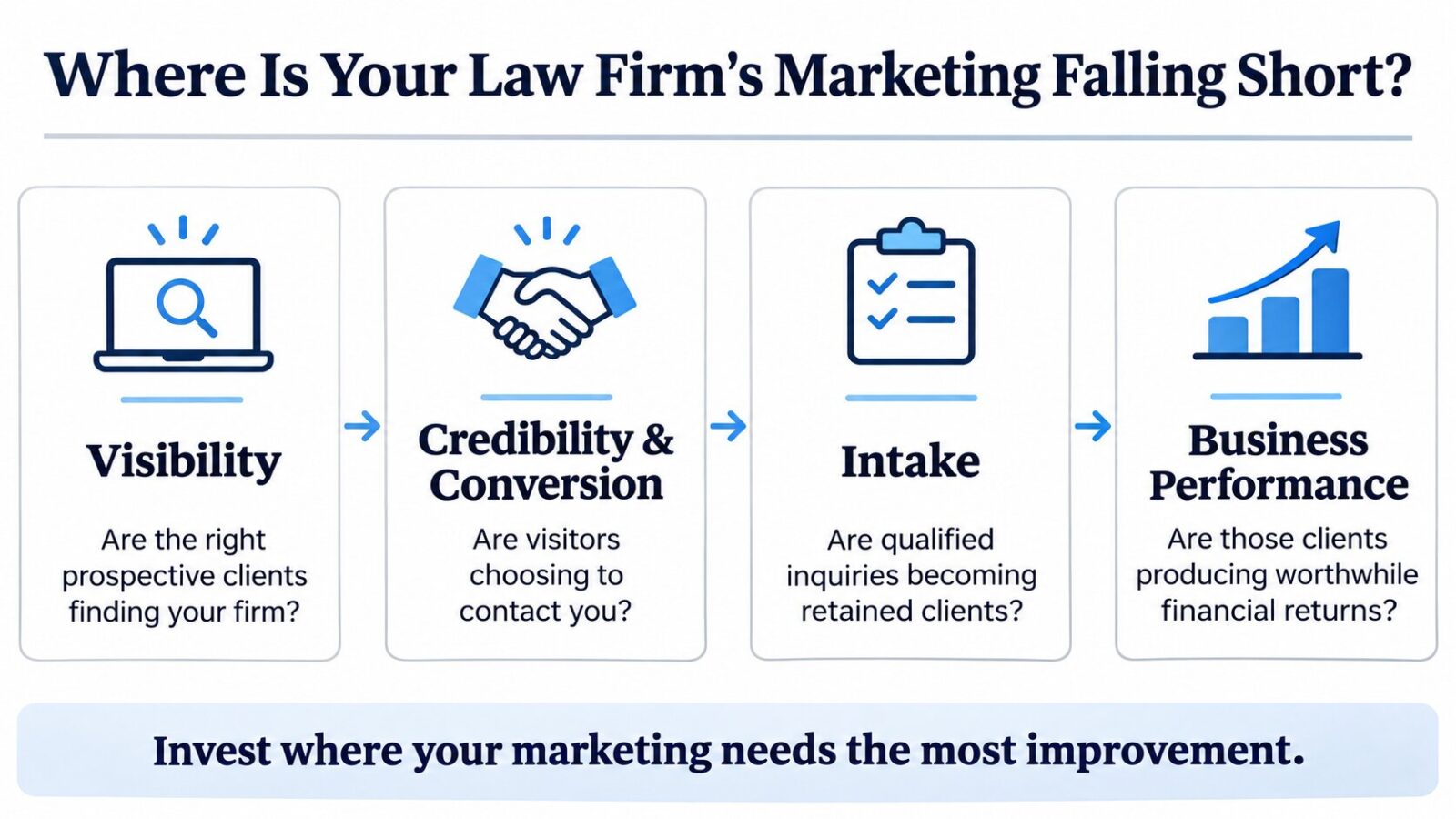
Build Your Marketing Program Around the Bottleneck
Before investing in another campaign, identify what's limiting your firm's results. The next marketing investment should address the part of the process that needs the most attention.
01. Visibility
Are enough of the right prospective clients finding your firm? If relevant traffic is lacking, review search performance and advertising opportunities to identify where additional visibility could make a difference.
02. Credibility & Conversion
When people find your firm, do they understand its services and have a reason to make contact? Website content and usability may need attention before additional traffic will produce better results.
03. Intake
Are qualified inquiries becoming retained clients? Missed calls, slow responses, and inconsistent follow-up can limit the value of otherwise successful marketing.
04. Business Performance
Are the clients you're acquiring worth the investment? Compare acquisition costs with retained matters and collected revenue to identify where spending creates meaningful business value.
A firm may perform well in several areas and still have one limiting growth. Identifying that constraint gives its next marketing decision a clear purpose instead of simply adding another expense.
Make Marketing Decisions With More Confidence
After exploring the different parts of law firm marketing, you should have a clearer picture of what each investment can accomplish and where its limitations lie. You don't need to become an SEO expert or advertising specialist to ask better questions about your firm's marketing.
You should know what you're paying for, what results to expect, and how those results relate to your business. That makes it easier to evaluate proposals, work with marketing providers, and recognize when a strategy needs adjustment.
Search technology will continue changing, and your firm's priorities may change with it. The important thing is having enough understanding of your marketing to make informed decisions rather than starting over every time a new opportunity or challenge appears.
Make Your Law Firm's Marketing Work for Your Business
Hexxen works with law firms at different stages of growth, from building their first digital presence to improving established marketing programs. Whether you need a second opinion on your current strategy or help putting a new one into action, contact our team or call (314) 499-8253 to discuss your firm's next steps.