

Marketing for Law Firms
A Practical Guide to SEO, Paid Advertising, Local Search & Lead Generation
Table of contents
Getting your law firm noticed in search results takes more than a website and a few blog posts. Your firm needs to be visible, credible, and easy for prospective clients to find. Getting there can be competitive, expensive, and difficult to navigate without knowing where to focus your efforts.
Our team at Hexxen created this guide for law firms that want to rank higher on Google, gain visibility in AI search, and attract the clients and cases they want to grow with. We'll explain how SEO, paid advertising, local search, and lead generation work together so you can make better decisions about your firm's marketing.
What's Inside This Guide?
| Part | What You'll Find |
|---|---|
| 1: SEO for Law Firms | How search engines discover and evaluate law firm websites, and what firms can do to improve organic visibility. Covers keyword research, website structure, content, technical SEO, and the growing role of AI search. |
| 2: Paid Advertising | How law firms use Google Ads and other paid channels to reach prospective clients. Examines advertising costs, campaign decisions, and the value of paid legal directories and lead platforms. |
| 3: Local Search | How firms compete for visibility in the communities and geographic markets they serve. Explores Google Business Profiles, local SEO, client reviews, and marketing across multiple locations. |
| 4: Lead Generation | How law firms turn website visitors and other inquiries into retained clients. Covers website conversions, intake and follow-up processes, and measuring whether marketing investments produce worthwhile financial returns. |
Where Is Your Law Firm Starting From?
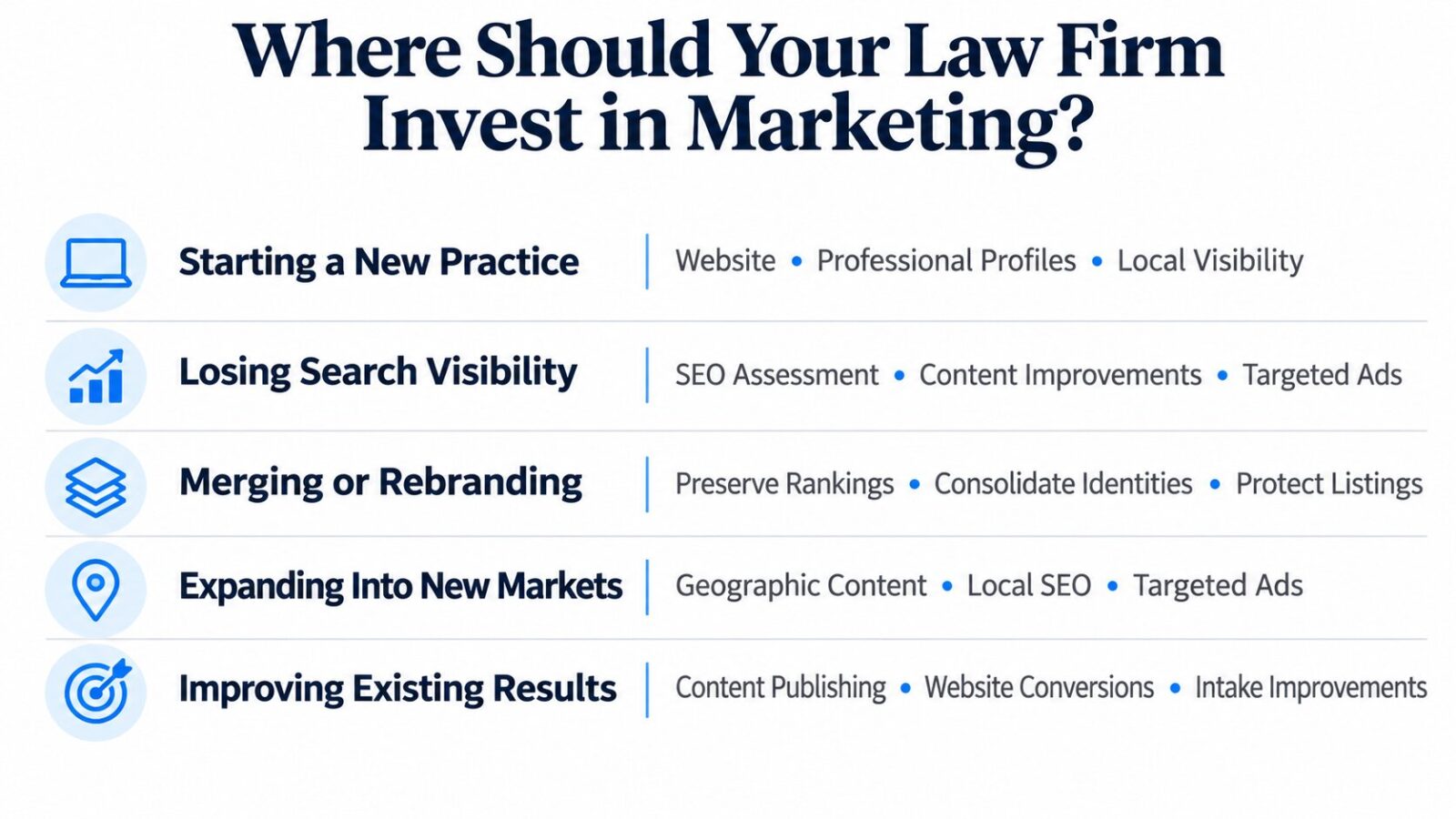
Law firms don't all need the same marketing strategy. Some attorneys are building their first independent practice, while others have spent decades developing a reputation. What makes sense for your firm depends on what you've already built, the challenges you're facing, and where you want the business to go. Understanding that starting point can help you identify worthwhile opportunities without spending money on things you don't need.
Going Solo: Building Your Firm's Identity
Starting your own practice gives you plenty of decisions to make, but also plenty of opportunities to establish yourself without spending a fortune. Your early marketing should help prospective clients understand who you are, what you practice, and why they should contact you.
A starting checklist for solo attorneys:
- ☐ Identify your primary practice areas and the cases you want to attract.
- ☐ Establish a professional brand around your experience and credentials.
- ☐ Build a website that can grow with your practice rather than settling for a temporary solution.
- ☐ Establish your Google Business Profile if your practice qualifies.
- ☐ Create or update attorney profiles on reputable legal directories.
- ☐ Make it easy for prospective clients to contact you and receive a response.
- ☐ Identify legal questions and topics worth addressing through future website content.
Starting small doesn't mean thinking short-term. A solid foundation gives you somewhere to build as your reputation, caseload, and marketing budget grow.
Partnering, Merging, or Rebranding
When attorneys join forces or an established practice changes its identity, marketing can become a complicated mix of old and new. Individual attorneys may bring their own reputations, existing websites, directory profiles, and established sources of business into the arrangement.
Before launching a new website or changing everything to match the new firm's name, take inventory of what's already working.
Identity: What will the combined firm be known for? Which practice areas, attorneys, and markets deserve the greatest visibility?
Existing Assets: Which websites, rankings, attorney profiles, and business listings already attract prospective clients?
Transition: How will the firm handle domain changes, redirects, contact information, and existing online references without unnecessarily losing visibility?
A rebrand creates opportunities to improve the firm's website structure and positioning. Poorly managed transitions can also disrupt search visibility and create confusion around existing business profiles and client reviews.
Losing Ground in Google and AI Search
A law firm may have a well-known name and years of search visibility behind it, yet find competitors gaining ground. Declining Google rankings, fewer organic inquiries, or limited visibility in AI search results can point to areas where its digital presence needs attention.
Investing in a new website or increasing the SEO budget might help, but the first step is identifying where performance is slipping and why.
Questions worth investigating:
- Are rankings declining for important practice areas, or is search traffic changing for other reasons?
- Does the current website have technical problems, outdated content, or gaps in its coverage?
- Are competitors gaining visibility through stronger local profiles, more relevant content, or paid placements?
- Could targeted advertising generate additional inquiries while longer-term improvements take effect?
An established website may already have valuable search assets worth building on. Reviewing its current SEO performance alongside paid advertising opportunities can help the firm decide whether to improve existing assets, invest in new ones, or pursue both.
Expanding Into New Markets
Growth may mean opening another office, reaching clients in nearby communities, or introducing a new practice area. Your current website and reputation provide a starting point, but entering unfamiliar markets requires understanding the competition and how prospective clients search for legal services.
Opening Another Office
A new physical location creates opportunities for local visibility. The firm may need dedicated location content, an eligible Google Business Profile, and a multi-location SEO strategy that supports both offices without creating duplicate pages.
Reaching New Geographic Markets
A firm may serve clients beyond its immediate location without opening another office. Relevant geographic content and targeted Google Ads campaigns can introduce its services to prospective clients in those markets.
Adding New Practice Areas
Expanding legal services requires more than adding an item to the navigation menu. Dedicated practice area pages and supporting content help establish relevance for new searches while explaining the firm's capabilities to prospective clients.
Expansion also means preparing for growth. As new markets and practice areas generate inquiries, firms need to revisit their intake and lead management processes to handle increased demand and turn new opportunities into retained clients.
Getting More From an Established Marketing Program
An established law firm may already have a functioning website, competitive rankings, and a steady flow of inquiries. The next opportunity isn't necessarily attracting more visitors. It may be getting better results from the marketing already in place.
A consistent SEO content strategy can help expand coverage into additional case types and legal questions. Improving underperforming pages and preparing the intake team for increased demand can also support continued growth.
More Marketing Isn't Always the Answer
Before adding another campaign, examine what your current investments produce. Improving how your firm turns website visitors into leads may deliver more inquiries from existing traffic. Better lead qualification and follow-up can then help turn those opportunities into retained clients.
Making Smart Marketing Investments for Your Law Firm
Every marketing strategy requires an investment, whether you're paying for advertising, developing website content, or dedicating staff time to managing inquiries. The challenge isn't finding a free way to attract clients. It's deciding where your resources will produce the most value.
Understand What You're Paying For
Organic search doesn't charge for individual clicks, but SEO still requires investment in content, website maintenance, and ongoing improvements. Paid advertising can generate visibility quickly, but its costs continue as long as campaigns run.
A limited budget may go further when concentrated on a few valuable practice areas or markets rather than spread across every available channel. The firm's priorities should determine where the money goes, not simply which marketing services are available.
Protect the Marketing Assets You Already Have
Years of search visibility and valuable backlinks don't disappear from a firm's balance sheet simply because nobody assigned them a dollar value. Business profiles, published content, and client reviews also represent investments worth protecting when changing names, websites, or marketing providers.
Before making major changes, pay attention to:
- Website ownership: Access to your domain, hosting, and existing content.
- Search visibility: Important URLs, established rankings, and links pointing to the website.
- Business accounts: Control over advertising platforms, analytics, and Google Business Profiles.
- Performance history: Data that shows what has worked and where previous investments went.
Fix the Problem Before Spending More
More website traffic won't solve a confusing contact form. More inquiries won't help if prospective clients rarely receive a response. And a new website won't automatically restore rankings lost because competitors have developed more relevant content.
Identify what's limiting performance before choosing another investment. Sometimes the answer is additional SEO or advertising. Other times, improving an existing page or changing how the firm handles inquiries can deliver greater value than attracting more visitors.
Measure the Business Your Marketing Produces
Higher rankings and increased traffic are useful indicators, but they don't automatically translate into valuable cases. Firms should connect marketing performance to qualified inquiries, retained clients, and the revenue those matters generate.
Evaluating law firm marketing ROI helps distinguish campaigns that attract attention from investments that contribute to the firm's financial performance. A smaller number of valuable cases may justify a campaign more than hundreds of inquiries that never become clients.
Law Firm Marketing FAQs
Q: How much should a law firm spend on marketing?
A: There's no universal marketing budget for law firms. A solo practice building its first website has different expenses than an established firm competing for high-value personal injury cases. Costs depend on several factors:
- Competition: Practice areas and geographic markets affect what it costs to attract clients.
- Existing resources: A firm with an established website may need improvements rather than a complete rebuild.
- Growth objectives: Maintaining a steady caseload requires a different investment than entering several new markets.
Q: Is long-term law firm marketing worth investing in when search technology keeps changing?
A: Yes, but firms shouldn't build their entire marketing strategy around one platform or tactic. Google changes. Advertising costs change. AI search is changing how people research legal problems. The firms in the best position are usually the ones that keep investing in assets they control: a useful website, accurate information, relevant content, and a credible professional presence.
Those investments can continue supporting SEO, paid campaigns, local search, AI visibility, and future marketing efforts even as individual platforms change. The Google Search Central guidance on helpful content provides a useful reference for creating information intended to serve readers rather than chase individual ranking tactics.
Q: Which marketing strategies should my law firm prioritize?
A: Start with what the firm needs to accomplish. Different business objectives call for different marketing investments:
- Generate inquiries sooner: Use targeted paid advertising while developing longer-term visibility.
- Build sustainable search traffic: Invest in relevant content and technical SEO to support the website's search performance.
- Reach more local clients: Improve visibility in the geographic markets where the firm wants cases.
- Increase retained clients: Address website conversion problems and opportunities lost during intake.
Q: How is AI changing the way people find law firms?
A: AI-powered search can answer detailed legal questions, summarize information from multiple sources, and influence which firms or websites prospective clients encounter during their research.
That creates opportunities beyond traditional Google rankings, but AI visibility isn't a guaranteed source of new clients. Firms still need accurate information about their services and attorneys, relevant legal content, and a website that supports the next step when someone wants representation. The challenge is understanding where AI search visibility fits into the broader marketing strategy rather than treating it as a replacement for everything else.
Q: Should my law firm handle marketing internally or hire an agency?
A: Many firms benefit from combining internal knowledge with outside expertise. Attorneys understand their practice areas and the clients they want to represent. Marketing professionals can provide specialized help with website development, search performance, advertising, and measurement.
Before hiring an agency, ask who will:
- Own and control the website, domain, and marketing accounts.
- Create, review, and approve legal marketing content.
- Report on performance and explain how results relate to business objectives.
The right arrangement depends on the firm's resources and how much ongoing work it can realistically manage internally.
Not Sure Where to Start With Your Law Firm's Marketing?
Law firm marketing can get complicated, but you don't have to solve every problem or invest in every channel at once. Start with what your firm needs most, understand what's already working, and build from there.
At Hexxen, we help law firms make their websites, search visibility, advertising, and lead generation efforts work together to produce business results. If you're unsure what deserves attention next, get in touch or call (314) 499-8253. We can help you figure out where to begin.